I landed in Munich and was absolutely captivated by the sights and smells and sounds that surrounded me. But, I had made a promise to myself before I left. I would not be that annoying American tourist who is heard from the back of the bus, that stops to take pictures, that gets in the way of pedestrians, and overall, I wouldn’t be someone who stands out.
I wanted to blend in as seamlessly as possible. Anyone who passed me on the street would see me walking with purpose and determination and come to the conclusion that I was a native German and, in some way, respect me more. They would acknowledge my disdain for other tourists and see me as one of them.
Theoretically, this works. In practice, I think it is actually a detriment; one that robbed me of crucial moments that actually serve to gradually assimilate a person into a new culture.
I landed in Munich and was driven down to Garmisch-Partenkirchen. That night, me and a few dorm mates flocked into the city to explore our new surroundings while we fought jet lag together. Power in numbers. While walking the Zugspitzstraße, the fading sunlight seemed to dance on the buildings, glittering and dusting the town in a warm haze that felt quite spellbinding. I marveled at the simple beauty of what I witnessed; the architecture was nothing fancy or baroque. Instead, it felt ancient and useful. We arrived in late summer and the flowers were in full bloom, trees were beginning to produce fruitful seeds and the grass itself felt healthy and vibrant.
Everywhere I looked, people walked. Or biked. But few drove. Then we arrived to Garmisch’s Marienplatz. Within the cobblestone square, cars were forbidden. Everyone walked happily, window shopping and strolling. Conversation rang out from the outdoor picnic tables sitting outside restaurant windows.
Yet, still I fought the urge to sit and take it all in. I tried to be as quiet as possible. I didn’t want to be seen or heard speaking English. Conditioned from a lifetime of hearing about tourism horror stories and reading about asshole Americans ruining things abroad, the last thing I was about to do was push that image any further. And so, while my friends enjoyed themselves, I withheld being present in favor of being what I thought was a good steward. I think I took only one picture of the entire night sadly. It remains only a faint memory these days.
On public transit for the first month, I refused to speak a single word. I learned to say “Einzelfahrt” and “Tageskarte” perfectly, practicing in the mirror obsessively for days until I was satisfied that I could convince a German bus driver I wanted either a one-way ticket or a day pass. I would sit quietly on the bus, acting like I didn’t know my English-speaking friends who sat right next to me.
In this way, I feel I robbed myself of those first experiences. While my friends were able to relax, take in the scenery and then live presently, I was in my head and wary of being loud. They adjusted much quicker to life abroad whereas my journey took much longer.
I was only fooling myself by being so withdrawn and reticent to speak. It was a silly venture to begin with as, if a German tried speaking to me, I would have to embarrassedly ask them if they spoke English. Maybe from afar I seemed a native, but once inspected, it became clear I was just another tourist.
I wrote this for my new travel website: Chipspassport.com coming soon! Thought I would give a sneak peek.
Travel is incredibly personal. Some are ready– some remain untouched from its grasp, content to remain at home and live comfortably.
This, however, was not the way I wanted to go; I knew from a very young age I wanted to see the world.
When I was a child, each day felt like it was the same. The same dull routine that just continued to recycle and spin in a flat circle, leaving me wanting more.
It was not that I had a terrible childhood; rather, it just lacked in excitement and felt quite lonely, not helped by the fact I was an only child who moved schools constantly.
Senior year of high school is when the travel bug officially had me.
I distinctly remember the moment it triggered in me. It was after watching the TV show Master of None. For anyone who hasn’t seen it, I would recommend they go watch the first two seasons immediately, then come back to finish reading this.
The first season is great in its own right but the second is a masterpiece of filmmaking. With outright homages to classic Italian movies from the 40s-60s, it portrays Italy as though it were magic. From rolling hills to sharp, jagged mountains, from farmers markets to Aperol Spritzes in outside bodegas, it is a fantastical land of hazy pleasure and lush beauty.
My first sip of wine taken in Italy– it lived up to the hype
More than anything, it felt intensely romantic. I knew I had to find a way to remain there longer than just the average tourist. This idea is what originally hooked me. It made me realize there is untold beauty elsewhere besides just the United States and I had to get out there and find it.
So I made a promise to myself: when I was old enough and able to travel, I would live a life of adventure and animation— each day would be different and full of mystery and intrigue. No longer would I feel like the star of Groundhog Day. I had the power to change my fate and I had every intention of doing it.
In the meantime, I set to work charting a feasible plan of my future hopes and dream travel destinations and how to make it happen. It moved slowly, but my life gradually began to traverse along the path I created based on the sole aim of traveling.
In 2019, I had the luxury of going for my undergrad at the University of Florida and things finally began to click. I had enough scholarships and grants that, by senior year, I was able to take a year off from work to focus on school. In between classes I began to expand my adventures.
I took a “practice run” to Miami and other weekend destinations to see how well I could travel without the help of my parents. It turns out it was actually much easier— who would’ve guessed!
I was not reliant on their wishes and desires, we didn’t have to stay at a hotel with free breakfast in the morning and I could go to nice restaurants without fear of their impatience toward a 20 minute wait at the host stand.
Miami, Savannah, Jacksonville, Tallahassee, Tampa, Atlanta, Charleston, Orlando. I began flying through the biggest regional East Coast cities faster than I could save up for them.
Each month held new surprises and possibilities and I was flooded with a passion and drive to see more and more and more. It gave me an excitement that I hadn’t felt ever before and, of course, soon I began to crave even bigger trips.
I needed to get overseas; I had to see Italy and the rest of the Old World.
The Old World in Monterosso, Italy
Unfortunately for me, my borrowed time was soon to run out.
I was approaching my last semester as an Undergrad and would have to either get a real job again or continue into higher education. The money I had saved up was dwindling and I didn’t much enjoy the thought of taking out loans for a Master’s degree so I subconsciously understood my year of freedom was soon to be cut off.
All of my friends had received internships in their tenure at UF, a route I had chosen not to pursue and one, consequently, that left me without many job offers. I decided I wasn’t ready for a big-boy job, I had to find a way to make my international gap year become a reality.
Luckily for me, and unluckily for my mother, my dad of all people found the solution for me.
He sent me an ad on Facebook for a ski lodge in Bavaria, Germany that was looking to hire Americans.
This “ski lodge” was actually Edelweiss Lodge and Resort, a hotel run by the Department of Defense for military personnel or active duty members of the Armed Forces, staffed by 20-somethings who just wanted cheap lodging and good travel opportunities.
The actual picture my Dad sent that started it all
The deal, according to the ad, was a free flight and free lodging in return for a fifteen-month contract of work in a department of their choosing. I jokingly applied for it one day bored during class and was astonished to wake up to a call the very next morning from their HR director looking to set up an interview with me.
Half-asleep, voice cracking, my girlfriend still snoring next to me, I answered the call and confirmed a second interview in a few days at 7:00am. Germany is six hours ahead of East Coast time, making this the biggest hurdle a drunk college student had to face: waking up early.
Fast forward a few days later, the interview was very straightforward– the questions revolving around “do you have a passport” and “are you willing to work abroad”. Of course, my answers were yes across the board and, all things being equal, I was hired a week later.
The paperwork for DOD contract positions is insane and, luckily, I had another six months to complete it while I finished school and packed up my life. The timing was perfect and I graduated with my degree in Communications and was allowed a month to decompress before heading out. The rest is history.
Lounging in Campo Del Moro, Spain
Helpful Tips for You
My circumstances for traveling were very special, I was able to live long-term abroad and save up money while I plotted my next destination. I don’t expect everyone to be able to take this same route as it is a rarity to find opportunities like this abroad.
But for anyone looking to see the world, I recommend finding seasonal jobs or even “volunteer” hostel jobs that are willing to work with you in terms of paying for your work. It makes things a lot easier and a lot more permanent if a paycheck flows in while living in the country of your dreams.
That’s not to say volunteering sites like Worldpackers, WWOOF and Workaway aren’t a great tool as well, but I believe they only sustain travel for so long and can often be quite toxic based on my friends’ experiences.
I still believe however you choose to travel, it will be a rewarding experience regardless. If you feel that travel bug biting, the best thing you can do is listen to it and find a way to execute your plan.
By cutting down on clutter, avoiding excess spending and remaining goal-oriented toward travel, you will find it’s actually much easier to accomplish than some people make it seem.
Budget traveling is very attainable — even comfortable — these days and there is more than enough resources to help someone on their path to financial freedom and long-term travel.
While my blog will help with this, I still recommend listening to professionals speak about it so you will be better equipped when you are ready to take that first step out the door and into your new life.
Dave Ramsey and his podcast is a great place to start, even if the advice he gives is typically just logical, common sense.
Great advice for financial literacy– the first step toward permanent travel
“The world is a book, and those who do not travel read only one page”
St. Augustine
Even if you cannot or do not want to travel to another country, find ways to see something new around you— to live more dynamic and engaging lives. At worst, you spend money and don’t like it; at best, you find a new home.
If you feel that travel bug biting, listen to it and let it take you where it will. Have the courage to try something new, even if it’s just for a second
“That’s edelweiss. It grows in the mountains, above the tree line. Which means he climbed up there to get it. Supposed to be the mark of a true soldier.” -Captain Nixon, Band of Brothers
There exists a flower in the European Alps; one more culturally significant and sought after than any in the world. One which is so rare that few will actually have the chance to witness it blossom in its endemic habitat, hoping instead to propagate or plant it themselves in an ordinary garden. Known as the Flower of the Alps, the Edelweiss (Leontopodium alpinum) is a wooly Alpine perennial known for the hairy, white bract flowers concealing a bright yellow, seed-bearing center. The tomentose leaves are covered with thick whiskers which serve to protect the sturdy plant during the extreme elements and can take a few years to gather enough resources to sprout above the ground.
They bloom only in the late summer months, specifically between July and August until the thick Autumn snowfall kills the aerial portion of the plant and lulls the roots into a dormant phase to last the entire winter. In full bloom, the daisy can grow up to sixteen inches and is a significant provider for mountain pollinators like bees and butterflies, providing a reward for their arduous conditions in the highlands. It provides a refuge to other small critters and invertebrates who may use the thick leaves as shelter and protection from predators. It is the ultimate indicator of biodiversity on European mountains; a healthy population is the sign of a healthy mountain so to speak.
The flower has been a cultural phenomenon. Early European cultures viewed it as a talisman of good luck. It was seen as a sign of eternal love and purity of spirit which, considering the circumstances in which it grows, makes sense. It is a symbol of resilience. Pure, limpid white leaves protect delicate yellow blossoms through ice, snow, frozen soil, low sunlight and anything else that which Mother Nature might throw. It is a protector and safe haven for the small, nervous bugs and creatures that dare to brave the high altitude and gives life to pollinators. Beautiful and tough as nails, it is a rugged, divine species. Perhaps it should be no surprise then that humans have picked it close to extinction.
Today, spotting Edelweiss in the wild is exceedingly rare. It is considered an endangered species and picking the wildflower is a crime in most countries.
However, that doesn’t stop many from trying.
It has been seen as a sign of true courage for a climber or mountaineer to pick the flower as they only grow in dangerous, extreme climates, typically above the tree line. It was mentioned in Band of Brothers when a dead German with a white bulb pinned on his lapel is found by Easy company. They marvel and appreciate the man, a brief moment of humanity in the midst of a brutal war.
I became aware of the plant very early in my life. I have been obsessed with the perennial since my viewing of The Sound of Music when I was just a child. One of my favorite songs of all time, to this day, remains Edelweiss sung by Bill Lee and Charmian Carr. The song first occurs in a very moving scene. Captain Trapp, a very closed off and severe disciplinarian, has been emotionally unavailable since the death of his wife. He finds out his new governess Maria has been allowing his children to prance and sing around Salzburg, engaging in what he deems foolish and silly behavior.
In reality, Maria has just allowed them to act as children ought to be able and for the first time since the death of their mother, they are given a much-needed respite from the intense structure of the Trapp daily life. Unaware of this fact, Von Trapp takes his anger out on Maria and orders her to return to the Abbey from whence she came. An Abbey with which she is already on thin ice.
However, he notices that music has gracefully returned to the house for the first time in many years; something he used to love very dearly. Eventually, after hearing the children sing a rendition of The Sound of Music, he changes his mind and allows her to stay. The children then encourage him to sing a song for which he used to be known to sing, Edelweiss.
“Edelweiss, Edelweiss
Every morning you greet me
Small and white, clean and bright
You look happy to meet me
Blossom of snow may you bloom and grow
Bloom and grow forever
Edelweiss, Edelweiss
Bless my homeland forever”
Each time I hear this, chills flood my body and roll glissading down the length of my spine. It is a special moment. He chose beauty over the easy, downward cycle of suffering and the words of the song stuck with me like a chronic itch, never to be scratched completely. It is a beautiful tribute to the flower and the deeper symbolic spirit represented in so many Bavarian natives.
I had to see Edelweiss personally. I wanted to feel that beauty of which the von Trapp family sung.
Luckily, I ended up in just the right place: Germany.
****
Garmisch-Partenkirchen
The mountains of Germany are misunderstood. While alpinism and modern mountaineering as we know it began in the playground of these peaks, Germany’s sect of Alps are seemingly scoffed at in the climbing community. No summit being more than a few hours work to the top, the conditions much easier and softer, the infrastructure more efficiently designed and scaled.
It would seem that the gentle, lofty peaks of the Deutschland are consistently set apart and broken down as a child’s Lego set in favor of the haughty, supercilious French cathedrals or the spindling, fibrillated spires of the Italian Dolomites. Admittedly, if one is looking for a true climb, France, Switzerland, Austria, will pose the highest degree of difficulty. Mount Blanc, Matterhorn, Dom, Monte Rosa, Lyskamm all eclipse the entirety of any given Bavarian peak.
However, it is the opinion of this man that German mountains are some of the most dynamic and interesting to be found in any sect of the globe. It is the perfect playground for one beginning their journey into alpinism. A veritable training course of Klettersteigs, ledges, shale fields, fording and roping that whets an ordinary, inexperienced novice into a sharpened pioneer who may now perform the most incredible tasks in the most perfunctory of manner. It is a first-class education regarding the respect one must have for a mountain and the earth in general.
One learns how a great range of factors like diet, meteorology, equipment, wind, mental status, UV range, the tread of a boot, breath work combine to form a subtext to any climb that ultimately influences the success or failure of one’s attempt. With the skill gained in the highlands of the German landscape, a true explorer is born and may find they have a confidence hereunto other climbers may not compete with.
These are abilities for which a Florida boy could only desiderate in a state without so much as a hill.
It is here that I found myself gazing fixedly again toward the Zugspitze massif, dreaming of the day I may find myself surmounting the mountain and looking down upon the direction of my current shadow.
These are moments that still heavily imprint into my stream of consciousness and are felt deeply in my memory. A song, a picture, a similar smell or breath of wind all can unlock in me memories of this climb to the top that is not unlike a Manchurian candidate rising to the beat of a trigger word to do the bidding of a power larger than oneself.
*****
The Beginnings
The story begins long before the day of our ascent. I had made a few climbs prior with a coworker named Kemper and we had very similar styles and mentalities which created an immediate bond of trust, a necessary factor in an environment where personal safety was of utmost importance. We knew from the beginning that Zugspitze was going to be the ultimate goal for that season and had begun training on lesser mountains to condition ourselves. The peaks of the Wank, Kreuzeck and Kramerspitze, as well as frequent trips to the local Boulderhalle all formed the foundation of our alpine resumé and quickly aided in our abilities.
Earlier that Spring, I had come across a man at the Irish Pub in Partenkirchen—IPUB for those acquainted. He was, on the surface, an intense, bearded man with an icy stare. One that made a person choose their words carefully around him for fear of unlocking the frenzied, caged animal that seemed barely tucked away beneath his North Face jacket.
I had heard of him before and all I knew was he had the reputation of being a fierce mountaineer who seemingly touted more conquests than Reinhold Messner. I was in awe of him and a bit hesitant to speak. But more than anything, I was curious to pick his brain and, hopefully, avulse information that would make me a better pioneer.
We got to talking and, after having a couple beers, it became clear that he was actually quite friendly. He just had that all too familiar German persona of a hard exterior and jubilant, agreeable interior. Every German I befriended was so very similar and it is such a big part of why I love them so much. No fake, saccharine Southern hospitality, only a protective shell and then a true, dear companion.
We spoke for as long as time would allow. He boasted that he had completed all three routes to the Zuggy in a single day. Starting with Höllental at 0300, he ascended in record time, took the Bahn (cable car) down and then began on the next route. Rinse and repeat once more.
It was a firsthand lesson on reconsidering the true capabilities of a human. While he said he took a nap after the second ascent at the Münchner Haus before beginning the last push, he still managed to climb a cumulative 8,907 meters in a single day. Those climbing 8,000-meter peaks, considered the gold standard in mountaineering, typically will break the expedition down into days or even weeks. While this isn’t a true 1-to-1 comparison admittedly, when considering the sheer vertical rise, it is nevertheless one of the most impressive feats of which I’ve heard personally.
He corroborated that Höllental is the hardest prevailing method of getting to the top. He chose to start there in the morning to preempt the exhaustion that would occur if he had chosen it later down on the road. We ended the night with more advice and another drink or two before parting with kind words, upon which I biked home through the cold, placid streets to ponder about the details of my future ascent. The streetlights whizzing past, blurring and contorting to a single thread of brilliance among the dark winter landscape while a world of possibilities began to bubble within me.
I must now take time to describe the route that we would be attempting to follow to better portray the elements and state of mind that we would be undertaking.
There are three established routes to the top of Germany: The Reintal Valley from the southeast, the Austrian Cirque from the west and the Höllental gorge from the northeast. In terms of difficulty, the Höllental is the most extreme and requires climbing gear and equipment such as crampons, hiking poles and via ferrata cables while the other two are much easier and will typically involve only a bit of scrambling, being more than anything just strenuous hiking. I never attempted the Austrian route. The Reintal is the longest and very demanding but remains non-technical, a test of endurance more than technique.
I wanted all the credibility of completing the toughest one and— more importantly— it was a longer bike ride to reach the Austrian side or to the ski stadium where the Reintal begins. I hated biking more than was absolutely necessary, I still do.
Another such route to the top is technically the Jubiläumsgrat, the ridge (translated literally as Jubilee Ridge) which connects the summits of three of the tallest German mountains: the Alpspitze, the Hochblassen and the Zugspitze. These peaks combine to form the spires of the basin to which the razor thin Jubiläumsgrat gives continuity. However, we would not yet be attempting this traverse as it requires even more experience and equipment than the Zugspitze. It also requires first ascending to the summit of the Alpspitze before beginning and therefor is not a true route to the top in my opinion.
This ridge is still, to this day, my white whale and I have every intention of completing it in the coming years. It is considered the most dangerous hike in Germany, if you can even call it a hike, and looks so extreme that it is simply daring one to even try.
The Höllental attempt begins as a stunning gorge, a location popular for day trips and less serious, but still intense, hikes. One will stoop through man-made caves dug into the carapace of the mountain and cross chain-linked bridges over the ravine to marvel at the sheer force and baronial effect of such tremendous rushes of water.
Once atop this gorge, a hütte will await them, offering comfort and hot meals as well as lodging if needed for the traveler who faces a fork in the road. A left will begin the ascent to Alpspitze, straight will lead to Hochblassen and a right will begin the true beginning of the Zuggy. A sign is posted at the lip of this trail, warning that gear, specifically crampons, are absolutely necessary for the sketchy, melting giant at the base of the vertical face. It omens to go no further upon the trail because it is exceedingly difficult to turn around once started.
The hike, past this point, will last for about 3 hours and involves scrambling over a couple less-exposed rock faces and traversing up large, portentous couloirs before arriving at the cirque of the entire upper basin. This section resembles a large toilet-bowl with scree fields and moraines directing water, rocks and refuse down to the valley below, snaking and funneling through the various conduits and channels before spitting out at the bottom in the Höllental torrent.
Once through the fields, the looming Höllentalferner glacier lies in wait at the bottom of the east face of the Riffelwandspitzen peaks and the Zugspitze wall. Eclipsed by the peak and untouched by the sun, it is the last obstacle one must face before beginning the sheer ascent of the face. Once strapped in and moving up, the climb lasts close to three more hours before rounding the last spire.
Near the top, numerous plaques dedicated to the mountain’s first conqueror, Josef Naus and his crew can be seen before catching the glimpse of the large gold cross that delineates the true ceiling of Germany and Avalanche Peak.
This is the path Kemper and I were set to begin. The day was September 1.
The Mountain
0430
I awoke to the blare of my phone alarm and the smell of the coffee in the pot I had programed to be ready in the morning. Folgers from the PX. My bag had been packed since noon the day previous so I had very little actual prep to do in the morning besides dressing myself. I am not a morning person so I rely on these tricks to stay alive.
The content of my rugged REI bag were as follows: PETZL via ferrata ropes and harness, micro spikes (more on that later), PETZL helmet, 2L camelback pouch, hiking poles, extra water bottle, mini first aid kit, 2 boxes raisins, 2 apples, beef jerky, a small bag of cashews and a flask of Jameson.
Seeing as this was my first time packing toward the intent of an intense climb, I definitely could have done a much better job and, realistically, I packed like an ape. Why I thought an entire 1lb bag of cashews was necessary is beyond me, yet such is the reality of my situation. My bag had enough support and never felt overwhelming, especially on some of the sketchier bits of climbing and for that I am very thankful. Kemper had much the same equipment in his bag but with two peanut butter sandwiches as an accessory.
I was enrobed in discount hiking pants from Mountain Warehouse, a wife beater (pleaser), a dry-fit shirt from a 10k I ran a few years earlier, a gaiter and my trusty off-brand hiking boots that I still wear to this day. While I admittedly looked quite homeless and unprofessional, I nonetheless felt the part of a ruthless vagabond explorer and had an intense calm about me as I grabbed my bag and tossed the rest of my coffee.
My roommate Luke was talking in his sleep and I wished him sweet dreams as I marched out the door.
Kemper and I met at the bike racks and mounted up for the 20 minute ride to Grainau, the municipality that hosts the Höllental gorge trailhead. I did not have a bike at this point in my life (still), so I cruised around the rack until I found one unlocked and made a mental promise to bring it back safe so long as I survived the journey safe myself.
For those who have never experienced a bike ride through Garmisch-Partenkirchen’s backcountry, I can only describe it as a religious experience.
The Hammersbacher Fußweg is a large valley snaking its way through the Wettersteingebirge mountain range, it is green against a backdrop of gray. There are cows and open prairies, a microcosm of criss-crossing gravel and paved trails each hurried on the way to their destinations. There are vast fields of the richest chartreuse spotted with deep brown log huts built as winter storage for animal grain and farm equipment. Goats ramble along the sloping sides of the hills closer to the Kreuzeck and sputtering creeks flow from one of many rivers slanting down from the mountain glaciers to intersect the cow pastures. Paraglider’s drift overhead on sunny days and starlight shines brightly on the crisp Autumn nights.
Any excuse to go for a bike ride or walk in this open field is another day of enjoying a beauty that seems hallucinatory. The deepest, most resplendent colors combine with the scent of an unadulterated air and healthy farmland to wreak havoc on one’s olfactory and visual senses and give the impression that it an oil composition accidentally stepped into rather than the present reality.
We rode through the winding, paved trails to the light of the moon, no sounds to interrupt the peace other than the occasional rush of a creek or low of a cow. The prominence of the mountain cirque grew nearer to us and the streetlights of Grainau became visible before long.
Eventually the outskirts of the city extended its arms to greet and envelop us in the quiet of a peaceful slumber which so many residents were enjoying. The night became absolutely silent, no noises audible for another five minutes save the pitter-patter of our bike tires as we rode along the uneven cobblestone streets.
We began to hear that for which we had been listening. The intense rush of water harshly and unhesitatingly billowing from a journey 2,900 meters directly downward. The Hammersbach torrent flows beneath us as we cross the bridge and reach the official trailhead for the Höllentalklamm. The cold, misty air suffusing our clothes and exposed skin, we lock up the bikes and sit for a moment to listen to the flux of the torrent before looking at each other and nodding.
Time to begin.
0500
By the time we take our first step, we are right on time. Our goal is to have a start early enough to avoid most of the intense sun and heat from late afternoon as well as beat the traffic to the top as there might be many others making the same journey today as well.
The Höllentalklamm begins with an intense elevation gain. We cross the water a few times on rickety, wooden bridges that feel akin to a ladder placed over a crevasse by Sherpas before the trail veers off into the forest for the next few hundred vertical meters. The path requires switchbacks over damp, crumbly rock before reaching more stable footing hundreds of meters above the white-water. Within a few minutes, any morning chill still residing in my body was stamped out by the intense workout and I began to break a sweat.
We followed these switchbacks and began talking and telling jokes. I don’t think once in our lives have Kemper and I ever had a serious conversation, it becomes a pissing contest of who can make the other laugh the hardest and it’s one of the biggest reasons toward my trust and admiration in him. We both know how to buckle down when needed but in the grind we can be silly and relax while speaking about nothing.
The jokes began to flow and it felt like the steep gradient were no more intense than walking through a prairie. I believe this is something of utmost importance to have when undertaking a feat like this. I believe, however, that if I ever shared the jokes we told on that mountain, we would both be sent to prison without the possibility of parole.
The trail began to taper off and become less extreme so we stopped for a quick water break before continuing toward our first landmark, the entrance of the gorge. The sun is still not up so we rely on the use of our headlamps to guide us along the increasingly narrow path that leads directly to the edge of the rock face. The drop to the left is an intense one as we get closer to the stone wall, probably 300 meters straight down, but the trail is so wide that this is of no concern. Yet, anyway.
Upon nearing the grey monolith, a series of manmade, wooden switchbacks await the traveler to carry them to the gorge entrance and hütte. During the summer business hours, this hütte also sells small bites as well as water, tea, beer and wine and is a beautiful lookout over the Valley of Hell etched into the limestone. If one squints, the edge of Garmisch city limits can be seen as well. This particular morning, it was too foggy to see more than 20 meters in any general direction so it was a moot point for us.
Seeing as it was still only 0530, we were able to bypass the entrance fee for the gorge and we pass through the silver, revolving gate without an issue. We are in the Höllentalklamm after only 30 minutes of actual hiking. We are making great time.
0530
There are two gorge hikes in Garmisch, the Partnach and the Höllental.
The Partnach is gentle, sloping and, honestly, overcrowded. It starts at the opposite end of the Wettersteingebirge; toward the northern Partenkirchen city limit, near Kaisenbad and the old Olympic stadium. It is the most accessible of the gorge hikes and still very interesting. A bit further past the gorge is also the start to the Reintal Valley route to the Zugspitze.
However, I personally feel as though it could never hold a candle to Höllental. First explored by Adolf Zoeppritz in the early 1900s, it a series of stairs and steel cable bridges carved out and strung up in the damp, meandering labyrinth of rock. Water drips over the path and slips down the side of the walls into the limestone path, splashing soddenly onto the heads of passerbys.
The cold, damp water curates a dank atmosphere that brings the morning chill right back to my spine. It is completely dark while we navigate the tunnels and stairs; a disconsonant feeling brooding within us knowing the water is rushing right below our feet but being unable to witness any evidence to that effect.
The air smells moldy and stale, stalagmites and slags dangle precariously from the ceiling as we duck and navigate around obstacles and further into the caverns. We are unrelenting and push faster. We snap a couple blackmail worthy photos of each other to laugh at later and document our time spelunking.
With luck, there are no slips, trips or falls and the enormous cavern begins to open up wider and wider before we can sense the sound of the water is beginning to dim. It takes us only 30 minutes to reach fresh air atop the gorge and find ourselves in a gaunt valley, level with the creek only moments away from its race through the gorge.
Once again, we are ensconced in a thick quiet; a blanket of dark, heavy liquid sheathing us from the outside world. It is still pitch black and we haven’t passed a single soul yet. It must be a slow day on the mountain, I figured we would pass at least a couple people before now but we haven’t seen any sign of humanity since the very beginning of our trek.
Headlamps still burning strong, we continue.
0600
The next landmark for us is the Höllentalangerhütte chalet, an oasis for weary travelers lost in the morass of the Wettersteingebirge. Situated in the heart of the lower basin, it typically will be a rest or launching point for any number of hikes or climbs. Available for overnight stays, day trips or just a quick beer it is the Mecca for community and travelers ebullient on their journeys. We heard they serve breakfast there too and were anxious to find out.
Still lost in the darkness, the hike creeps typically along without much ado. We quickly begin to gain more altitude as we listen to the dull crunch of our boots along the gravel trail and question the series of cow hoof prints that we note are starting to mottle the dirt and grass. We see heaping, ochre scads of dung littering the path, the steam still flittering from the piles and enticing the flies hovering above, leading us to ponder how a herd of cows reached this destination. How did livestock make it down into a gulch surrounded by high rock, cloven by a rushing river? We never found out. We heard the loo of the herd many times, the tinkling of the bells piercing the heavy silence but never once were we able to make out any discernible outline of an animal.
The gradient of the sky began to transition from black to blue by the time we were close to the chalet. We were nearing the top of the hill upon which the Hutte rests when we began to understand that, though the sun was finally coming out, sight was not likely to improve with it.
A deep fog had been resting atop us for an undefined period of time and, according to the radar, was set to last the entire day. We were literally within the cloud cover after just two hours of hiking and they were not soon to depart. It seemed they would be our fluffy, low-visibility companions for our journey. It could be both a curse and a blessing, depending on the person reading. Curse for Kemper and I as we wanted to see the fruit of our spoils and look down upon the valleys we climb and see the progress marked in front of us. A blessing for anyone scared of heights who doesn’t have to see the vertical drop just inches from their soles. My dad probably views it as a blessing, he’s scared just being 6’3”.
As the dark blue sky that encompassed us began to imbibe with hues of white, we rounded the last hill of the first third of our journey and took in the beautiful, picturesque sight of the Höllentalangerhütte standing before us. Patio tables empty and standing raptly at attention, umbrellas drooped solemnly at ease over the banister, a solitary light burning inside the house. Not a creature seemed to be stirring, not even a mouse. Devastatingly, we saw no evidence of breakfast when looking through the downstairs window and so resigned ourselves to the meager food we had packed.
0630
Stowing our belongings on the table, I unearthed the beef jerky from my pack while Kemper took to his peanut butter sandwich like a rabid dog in the throes of fury. It was frightening to watch.
Neither of us much wanted to sit for fear of freezing out our legs, so we stood and observed the fork in the trail above us, contemplating what the future might hold. The next third of the hike was set to be the least eventful, technically. It was a fairly straightforward portion according to Alltrails and so we reckoned we might hike it as fast as possible to beat the crowd to the summit.
Boy I was in for it.
Tossing aside the apple I had just devoured, we checked our gear and did a quick inventory to assure ourselves everything was accounted for. Starting now, it would get quite difficult to turn back aside from a helicopter ride paid with the help of our DAV insurance. We placed our packs back squarely upon our shoulders and clipped the middle straps, squaring the equilibrium of the weight and assuring the bags would not move during the future climbs incoming.
We nodded at each other and started back down the path, stopping at the sign on the right to notice that it demanded anyone continuing further have crampons ready for the glacier. Neither of us, by technical standards, did have crampons. I had one-inch micro spikes and Kemper had only 1/2”. Neither of us really figured it would be that big of a deal, Kemper even went so far to say that he heard stories of Germans who did it in their tennis shoes. Looking back now, I think he was lying.
We took one more moment to read the sign and then we were off.
One hour passed uneventfully. More vertical elevation. More jokes. More stumbles and trips. More signs of cows. The sky now completely bright yet so filled with fog it would have been an impossible task to determine which direction was which.
We were surrounded by a blizzard of clouds, marking our progress only by the Alltrails GPS as we couldn’t see any direction more than 20 meters or so. We were skirting the Southern edge of the ridge yet still within the tree line and so were surrounded by fields of green during this section.
We hiked along glossy, rolling hills and through lonely, empty prairies and my mind marveled at the fact that an ecosystem like this should exist so elevated in a mountain range. Mostly untouched by the hand of man and scarcely a bird call to echo through the lonely chamber, it was as though I was hiking through a snow globe. Surrounded on all sides by great walls, unburdened and dehiscent by living creatures– it was my first true moment of peace.
Truthfully, if I was able to simply remain there for all eternity, I would. It had a profound effect on me that I wish I could convey through this text. Unexplored areas utterly devoid of human interaction have always appealed to me and the halcyon of this garden of the gods touched me for life. As if by magic, for a brief few minutes the clouds parted and the entirety of the plateau we stood unfurled and I stared dumbfounded in wonder for a great long while.
I decided I’d like my ashes scattered there whenever I should pass.
Nonetheless, the clouds soon returned and it was time for the trek to continue. We reached the top of the knoll and found that we had backed into what seemed to be an impassable wall. At first, we saw no flares upon the rock to mark the trail and thought possibly we had run afoul of the designated path; however, our GPS signaled we were in the right spot and we knew we had followed the beacons closely to this point.
After some observation of the rock face, we finally saw it. Quite a bit up the rock, the familiar red paint slashed with white could be seen printed against the mossy, green limestone and we quickly comprehended the reality of the situation: we were going up.
0830
I liked watching Free Solo as much as the next guy and felt myself a pretty competent climber, but an unexpected climb up a 20-meter rock face was not quite what I envisioned to be on this climb.
I expected supported, aid climbing through via ferrata but not unsupported, free solos to the top. I expected the infrastructure to be better and more developed to avoid something like this but unfortunately I was incontestably wrong. It was not quite a sheer face, it was more scrambling than any real, tenable exposure but I still was vastly unprepared. Reminiscing, it was no more than a 65-degree gradient and was doable for someone with barely any climbing experience but still was a shock to my system.
With any million-mile journey, it starts with a single step. With that climb, it started with a single handhold.
Slowly, we worked our way over the craggy, knotted boulders and squeezed ourselves in contorted positions to chimney up the rock. All was well until we reached a position where a bit of height was required to reach the next handhold. We were hooked in a position about 5 meters over the previous landing and, if we fell, we would likely survive but it would likely require a helicopter to evacuate us back to safety.
To continue, we had to reach a hold that protruded out of the chimney feature and into the boulder above. I was below Kemper and we both had four points of contact with the rock to level ourselves in the chimney, slowly inching our way higher. A veritable snail pace of using our hands to push the columns on either side and slide our feet up before wedging our boots against the walls to increase the position of our hands. Picture Santa Claus trying to escape out the fireplace.
He had made it virtually to the top when we reached the crux of the problem, we would have to make a very exposed move and grab the outside lid of the chimney before climbing out. The move seemed so exposed and treacherous. Kemper tried to swing out and find the hold but couldn’t grab on. Then he tried again, to no avail. Almost losing his footing, he stopped and regrouped, breathing heavily. We both, wedged in the chimney, began to discuss finding a different way if necessary.
Eventually, he decided he was going to make one last attempt. Blindly arching his hand around the top of the rock, he swung out wildly and, luckily, arrived flush with his target. From there it was a matter of using that hand to leverage out and push off with his feet until he was able to scramble over. He disappeared from sight and I assumed that to mean he had survived. Then it was my turn.
Luckily, my arm is quite a bit longer and I had no real trouble swinging around the rock and pull myself up above the ledge. After a few seconds, I found myself standing with two feet on the ledge overlooking the chimney.
It was an automatic, unhesitant action that I didn’t even consider might be dangerous in the moment. I love dangerous activities as they are always able to channel my thoughts into one singular state of mind and quiet the rest of my intrusive thoughts for a while.
Once completing this move, the rest of the scramble was very straightforward and simple. We walked away from the rock esplanade, feet once again on terra firma– a grey dirt path directing through a field of green. We were much higher now than before; trees no longer disported their friendly, pendulous limbs or provided their merciful shade. We were very close to head of the mountain walls and now didn’t have much further to hike before reaching our first, official via ferrata.
At the base of the hike lies a rocky knoll upon which travelers may don their harness and ropes while they gape at the view below them.
By this point, the lower basin has been completed and one may look straight down to the gorge and fields below while the city limits lie much further in the distance. The fog has broken for us and we are able to witness all of this and astound at the progress we have made. We must now go straight up insofar as to reach the upper basin, rock fields and glacier.
0900
We don’t stop to rest or eat; we take a quick sip of water from our Camelbacks and put on our equipment while storing our poles. He takes the lead, clipping in and gripping the rock to start. This ferrata is much easier than what we had just “scrambled” through which is a huge relief for our weary arms. It takes around thirty minutes of sketchy iron rods, crumbly rock and vertical elevation before we reach the spot this ferrata is most known for.
Stretched across a sheer, vertical face is a horizontal line of steel rods hammered into the mountain for 200 meters, a metal cable snugly held firm one meter above. Each black rivet is no more than two feet from the previous, with the occasional bent or broken pole sloping downward and facing a heart-rending 500-meter vertical drop. Put simply, 3″ railroad spikes driven into the mountain are all that separate us from certain death in the valley below. Much further across the mountain we can see the next patch of firm rock but we will have no footing besides rivets until then.
Shortly before we are able to clip into the cable, we are surpassed by two German men. Now these men are terrifying for two reasons: they are neither out of breath or even slightly winded and, worse, they are not wearing any protective equipment.
They must obviously practice on this mountain with some frequency because they outpaced us in a matter of minutes and were quite jovial, talking and laughing amidst Kemper and I’s struggle. They asked if they could pass us to continue ahead on the horizontal rivets and, of course, we didn’t want the lunatics following close behind so we agreed.
Without even stopping to consider the danger of their actions, without any harness or rope, they throw their feet out to the vertical face and catch the first spike with ease and grace. They get through five studs before they even begin to grip the steel cable attached above which Kemper and I would be soon holding onto for dear life. I sat there flabbergasted. It was a good lesson in humility. However good I thought I was, obviously I still had a long way to go before I was a true mountaineer.
The pitch is actually quite manageable and, so long as the fear of heights does not affect us, we should be fine. The fog is thickest here and visibility is less than 5 meters, meaning that below our feet is a sea of white precluding us from any true concept of what might lie under the spikes. It is strangely comforting but it still felt in a way as though we were treading water in the middle of a deep ocean— blind to any predators or danger or distance.
This final stretch of cable soon ends in a narrow gulch, feeding straight up for a few meters before plateauing to a very pleasant and momentary respite. We clamber to the top finally and the first via ferrata pilgrimage is completed. In reward, we are greeted by a stunning view of the crater from which we have climbed.
The fog again breaks as though the hiking gods have a cruel sense of humor. A small respite in the clouds for us to taste of the humbling environment before it is once again snatched away within a veil of damp gray mist. However, the brief glimpse inspires me greatly and I feel my first real sense of accomplishment thus far. The sun shines brilliant, golden rays upon the rock faces adorned with the dotted patches of emerald grassland. We can directly trace the trail, a river of silver running through a forest of green and it is an impressive sight to me.
One feels very small standing on that first ridge line looking upon the fathoms of distance between the current perch and the protracted expansion of grassland.
1000
We turn around when the fog regroups and resets upon the prairie land. Looking up, we can see a shale field with a steep gradient ahead of us, grey lees scored by the abrasion of ancient glaciers and lining the path like Ancient Greek pillars carved for Mount Olympia. The loose scree gives way to another short scramble of hard rock, not steep or exposed enough to warrant a rope or via ferrata but sharp enough to pucker my insides and force cold sweats upon my forehead and spine. It is mercifully short and edges toward a brushy thicket where I stop abruptly.
This is my first real chance to inspect a patch of wildlife “off the beaten path” for my true reason for this climb: edelweiss. We are now at least 1800 meters up and in the ideal biogeographic zone rich in environmental factors that particularize their residency here. Obviously picking the flower, by German law, is “illegal” but I will admit in that moment I again ruminated with all the wrong intentions.
Surveying the grass, my hands sifted through individual blades of grass, between rocks, along the branches of the thicket and down among the roots. It was all to no avail, this particular clump of greenery was barren of the white Easter eggs for which I searched. I would sadly have to continue my search atop the next valley or rocky face, any opportunity that presented itself to me. A true mountaineer would be able to find one; I refused to go back emptyhanded.
We grip the great interstices etched into the wall and saddle our way up over into another dirt trail, one that is similar to the countless other kilometers of paths that we have walked already thus far but which turns steep and craggy very quick. We pass sporadic meadows of green, becoming sparser with each step. Once again, I branch off from the main trail quickly while Kemper stops for a quick break and investigate the clumps of grass, straining my eyes for a glimpse of the woolly, white icon staring back at me. In response, mountebank eggshell wildflowers only laugh mockingly at my abortive attempts, swaying in the breeze and whistling with the wind. I am once again disappointed in the utter lack of Edelweiss. Was the blooming time wrong? Did I misunderstand what early fall meant? From all research I had conducted, this was the perfect opportunity for me to find my prize. Was it possible that Captain Nixon was lying? Maybe it was wrong to base so much of my journey from one single quote of a TV show but I just felt that it had to be true. The grassy knolls could be the exact wrong place to look, in which case I reset my expectations and denied the disappointment bubbling within, returning to the trail. For a spell, success felt tangible. Yet still I continued to trudge onward, beggarly and resentful, without my flower.
1045
The dirt trail continued to rise sharply. My legs felt dangerously close to being truly fatigued and the fog, which prevented us from comprehending how much further remained of this portion, made this the most demoralizing moment of the entire trek. We had covered over 2000 meters of straight elevation gain in the last 4 hours, at least 10km of which involved switchback hiking and my legs had begun to grow pumped.
“We are only about 2 clicks from the summit, as the crow flies,” Kemper continued to repeat. Knowing it drove me crazy, he would repeat the idiom as often as he deemed feasible without being thrown off the mountain. Anytime I asked for a distance check, it was always “as the crow flies” rather than the true distance.
I had taken only one true break this entire journey. Admittedly, this is due mainly to the ultra-competitive spirit I possess in these situations—I did not want to stop for fear someone might pass us and make better time. I didn’t just want to climb the mountain, I wanted to conquer it.
But in this moment, those thoughts eluded me as each breath in and out pierced my lungs and my heart pumped a staccato tone of misery. The steep hill never wanted to end. One step. Then another. Just one foot in front of the other. Breathe in, take a step. Breathe out, take another. It became a slog. I wouldn’t look up for fear of a demoralizing distance still to reach. How much further could it possibly be? I braved a look, which carried an obviously unfortunate answer: no end in sight.
Only the fog held in its grasp the answers to the true distance we had left, nothing was observed save more loose rocks skittering and clattering down upon us as we plod up and up and up. It felt as though we were poor animals stuck in a plashet of quicksand, each step forward an agony consummating a quick demise. The deep mist that isolated our journey served as a muzzle and manacle. Prisoners to the mountain we were; subject to its capricious whims and malicious sense of humor before being directed to the courthouse where mother nature served as judge, jury and executioner. Habeas Corpus waived, the weather and landscape alone determined our verdict unhearing and unconcerned of personal input.
Like all difficult things in life, eventually it will pass. Life will go on; time will continue to tick and all wounds will heal. So it goes with the mountain. The gradient became less severe and finally outright leveled itself to a manageable degree. We stood and licked our chops for a second, insufflating our lungs with air. The worst part of the whole affair was that we had just finished only the easy bits of the hike thus far. An ordinary, decently healthy individual would be capable of all that we had just accomplished. At no point where we ever truly in danger, exposed, fearful or felt our skills challenged on a technical level. While yes it was tough hiking, especially for a simpleton from Florida like me, it was merely a question of cardio. Having proved ourselves cardiovascular champions, the technical bits began.
Without knowing, we had arrived in the scree field. Brief Roches mountonnées peeked their abraded faces above the loose rock, the jagged lees dropping sharply and colliding against the plane, a backdrop of white rock poxed by mossy lichen against the silver quarry. Limestone pavement, carved by the millenniums of glacial erosion, formed brief walls and castle turret features, as though protecting the massive basin from intruders wishing to seek harm.
It recalled to me the story of the foundation of the Münchner Haus. The Wehrmacht situated a cable car station (soon to be Münchner Haus) on one of the three summits and destroyed another, the original tallest of the group, for a potential Nazi flight control station in 1938. Ground was never broken and infrastructure never logistically delineated as the Nazi party began to direct resources toward other avenues and so the tallest mountain in Germany was irrevocably stunted and altered, leaving only one summit of the three remaining. One that was noticeably shorter and now sits lonely as a survivor of patricide of German sons and daughters.
The turrets gracefully allow us to continue as we traverse the narrow trail and gradually exit the steep couloir into a truly open expanse. The first of the entire journey, a veritable desert that owes its topography to the fact it is an enormous cirque in this Alpine massif. As if on cue, the fog gods decide to play their tricks on us and cut through swiftly and decisively. We are left with a complete view of the basin in which we sit. Far in the distance, I see that for which I have the most trepidation: the Höllentalferner glacier.
My breath is taken away. From where I sit, it looks like innocent. A brief, white landing strip nestled cozily in the protective walls of the monoliths above. Then, the true scale of what I see hits me and I genuinely, for the first time, grow worried. It is straight up. It is massive. I reckon it is an absolute minimum distance of four football fields from head to tail. The white tract is speckled with small black pinpricks, seemingly slowly contorting and twinkling, as though a reversal of the stars in the night. They are people.
“Surely we don’t have to walk across it.”
“No man I think that’s us.”
“There’s no way. It’s got to be another glacier or patch of ice we actually hike across.”
“I don’t think so, Alltrails is leading us right there, it’s the start of the next via ferrata. Maybe there is a way around it but I’m pretty sure that’s the way through.”
“Well— it’s been nice knowing you.”
“You’re going to be fine you coward,” Kemper yells at me.
Insults stinging through me, I turn my attention to the giant fishbowl in which we seem to have found ourselves. It felt like we had entered into a lobster trap, maybe the turrets we passed weren’t protecting the mountain but rather giving a warning. I wondered if we had entered through the gates of hell and just missed an etching of Dante’s quote: “Abandon all hope, ye who enter here”. The name Höllental suddenly gave way to clarity and comprehension, this really was a valley of hell. One passes through these turrets to begin an odyssey from which they cannot turn back. The mountain stood ready to fight and Kemper and I sure had one coming to us.
1145
The scree field didn’t always look so deserted and empty. The Höllentalferner glacier once covered the area of the entire basin as recently as the late 19th century according to folklore. When Josef Naus ascended the peak in 1820, he mentioned the size of the glacier. Gradually, as with all glaciers in Europe and really the entire world, it has continuously shrunk over the past century to less than a third of the original size; it now sits at only 61 acres. This mercifully, is unlikely to change very drastically in the coming decades. A lucky combination of factors are to thank for this survival: the cirque in which it sits is shaded by the dual spires of the Riffelwandspitzen and Zugspitze and it’s known as a Lawinenkesselgletscherfed, a German glacier fed yearly by the avalanche snow. While a minuscule ice shelf by most standards, it is still quite dangerous as a great many avalanches feed directly to it and, as the snow settles over crevasses, the deglutitious ground opens up and consumes hikers and climbers in a method not dissimilar to the great fish swallowing Jonah for three days and nights.
It is a survivor; it is scrappy and acrimonious of spirit. Unfortunately, it is but a ghost of the original ice plot that once resided in the bowl, leaving a graveyard of loose shale and tumultuous boulders in its dying wake.
Theoretically, this should be the easiest section to navigate. How hard could it be to walk through a bunch of rocks for a while? After what we think we have seen, this should be a warmup.
I encourage the reader to picture themselves on the beach. The ocean has been swam, the nap has been taken, the sandcastles dug. It is nearing the end of the day, the hot sun has beat down upon their bodies unrelenting and callously for an entire afternoon and one can feel the blood pulsing in their head as the heat has drilled deep like a parasite into the base of the spine. Where is the car? Well of course, it is all the way back in the parking lot. The parking lot that is at least a quarter mile inland. In the haze and the misery with the migraine building, the umbrella must be put up, the chairs stowed, the coolers hefted on the shoulder and all trash retrieved. With all this extra weight, one may finally move forward. And where does the path lead? Any beachgoer knows, it is through loose, coarse sand. Over prickly, superheated dunes. The loose sand seems to make every footstep more disagreeable than the last, seeming set toward engulfing the leg rather than supporting. That trudge, that weakened march, that denounced, horrible reality; that is what we faced in that moment magnified exponentially.
The path begins very stamped and civilized, a hard gravel crunching under our dragging boots as we take the first steps into the devil’s lair; an even, solid footing to entice us forward. We begin to notice loose rock seemed to encroach on the trail more and more. Suddenly there is less than half a meter on which to balance sturdily. We take what we can get but it becomes clear nothing will be getting any easier. To the contrary, it seems the trail is intent on pulling us out to sea like a forceful rip current only to dump us in the middle with no assistance or bearings. The slim line we follow comes to a complete halt soon thereafter, only a couple hundred meters within the cirque. It is up to us now.
Stopping for a bit, we notice there are the familiar red paint gashes brushed sporadically on the larger rocks, giving us our only clue that we were essentially relying on our own instincts to traverse the toilet bowl. Kemp and I decided to divide and conquer. The easiest method seems to skirt the edge of the canyon along the base of the rock so we follow this route to varying degrees. He goes straight up while I try to run parallel and slowly ease up to the line he wants to set. With that in mind, we begin walking.
This was not our greatest idea. What we fail to take into account is the running stream of rocks and scree that will be set forth, tumbling down and deluging to the center with each step we take. I feel as though I might slip to the center as the ground grows more unsteady by the second, shoes sinking into the macadam and larger stones and seemingly stuck in motion. Kemper keeps hollering down to me to watch out as rockfall continues by the minute, each torrent only our fault and therefore unavoidable. My chosen path begins to zig-zag as I care less about a direct line and more about what footholds seem more stable than the others. I hear my partner yelling obscenities from above like the voice of an angry God. The glacier in the distance shines brightly in the reflection of the sun and still feels as distant as it was when we began the journey. It is unbelievably slow going. The landscape changes and morphs with each passing second, other hikers have now joined abaft and it feels as though a race has begun.
My path eventually comes to meet Kemper’s and we are only a few meters from the wall to our right. I would not actually recommend blazing a trail this high up to any travelers looking to follow in my footsteps. The gradient is way steeper being this close and we are walking perpendicular to a never-ending couloir, unable to ever feel level. In our heads it seemed logical but in practice it was a very unintelligent move leading to a supremely beleaguered route. Going down, however, was definitely not an option anymore.
The way had been chosen for us and we no longer had any input. Perilously, we follow the ridge and try to ease our way back down but to no avail. We were hundreds of meters above the center of the cirque. The crevasses and snow creeks sitting in the center seemingly waiting for us, a couple of crocodiles looking up below the dock, patiently waiting for their next meal. The small rocks began to grow larger, each slag resembling the size and shape of a school textbook. An evil accoutrement to the footpath as each one wobbled precariously and threatened to break ankles and send us toppling to the doline at the foot of the glacier.
I noticed gratefully the ice appeared closer. I began to observe specific lines and crevasses hewn into the frozen face and felt a sense of relief. The path angled sharply downward, leading us to curse the valley before treading carefully among the jutted rubble of scattering stones. Down and down, we went. The pain in our chests conducted down to our knees and ankles as the force of the load weighed heavily upon our poor, sodden joints. My quads understand I reached the nadir before my brain could comprehend, but thankfully our journey further into hell was complete. We had made it to the base of the ice. Going down is always worse than going up, a fact I garnered rather quickly from my experiences on mountains.
The foot of the glacier was only meters away. A slight incline led us to what I like to call “the changing room”. It is a quick bit of solid, flat ground before the beginning of the ice cap that I observed to be the area where all hikers began to fit their crampons, lace up the harness and re-clip the cables for the upcoming Klettersteig. It is, more importantly, the very last bit of stable ground until the summit. At no other point will we have an opportunity to stop and rest for the next foreseeable future. We, however, did not know this and threw on our PPE with reckless abandon.
For the first time the entire day, we were joined by a mass of people and were not alone to pursue our journey in peace. It was as though we reached the line to summit Everest and now were subjugated to the traffic and whims of others and, as such, we wanted the biggest head start we could get.
For the attentive reader, they will remember that I briefly discussed my micro-spikes earlier in the stead of true crampons. There are a few reasons why I chose this particular accessory for the day, none of them good. I didn’t want to buy true crampons, I heard from a friend that they weren’t even really necessary and a friend had an old pair of spikes he was willing to lend me for the day. How hard could it really be? My boots are good and it’s just a small patch of ice, I believed. Let me clearly enunciate: that was wrong. I have made many costly mistakes in my life but the choice of these over true crampons was truly almost the final undoing of my life’s story. I will elaborate. Spikes are typically for everyday use like walking through snowy suburbs or icy roads. Potentially even casual hiking to a certain degree. Cheaper, flimsier and less sturdy, they are not intended for actual glacial traversing nor are they intended as a lifesaving device. These are the exact opposite of what one scaling a mountain requires and, ironically, it is exactly what I chose.
The spikes are very easy to install. The apparatus consists of a rubber frame to fit around the boot, interspersed with short, half-inch metal nails with which to dig better into the ground. Not enough for a steep slope but enough for the daily walk. I stretch them around my soles and take a couple short, practice steps to better understand how they grip. It seems competent— on level ground I must reiterate— and so I take my first step onto the ice shelf.
1200
Toward the beginning, the frozen glacier is buried tenderly beneath a brief layer of shale and rocky debris. Pockets of ice peek from under the grey slab but are summarily buried as a whole and, as I step into an adulterated compound of silver and white, each crunch resounds thoroughly in my ears as the stones and ice commingle. The mountain is perfectly still, no noise emanating from any organic sources. We have only the crackle of our spikes sinking into frozen tundra and the heavy gulps of breath with which to occupy our ears and, upon stopping, it seems time itself grinds to a halt— a stillness that could only be fabricated by the cessation of earth’s revolution around the sun. It shouldn’t be possible for life to be this serene and muted.
Unfortunately for the folks enjoying this pastoral landscape, this silence was soon to be broken by outbursts of indescribable vulgarity from the mouths of Kemper and me. We were only 10 meters onto the Höllentalferner when the fun really began. The ice began to grow steep. Very steep. Our spikes began slipping and refusing to catch in the ice. For the first time in 23 years, I was actually fearful for my life. Truly, indescribably fearful. I was surviving solely due to my own merit and, while I had done this before, the danger was acutely pronounced now.
I had chosen not to carry an ice pick for the day. While I knew it was recommended, I felt that my hiking poles would serve me well enough and aid through any sticky situations. I was aware they were not the strongest poles and were unlikely to support my entire body weight but pride and arrogance informed me of the superfluousness of any more tools. I made the wrong choice. I had better spikes but no pick. Kemper had scarcely a spike under his shoe but he had the good sense to bring a pick. We were a Machiavellian sort of balanced.
Each movement of my feet lasted an eternity. I would do my best to stamp a foothold into the glacier with my sad, puny spikes and, simultaneously, force my two poles into the unforgiving ground as deep as it would allow before using them to pull my body weight up. The ground was so treacherous that I didn’t dare trust the tread of the Mountain Warehouse boots. My body weight leaning completely forward, solidly parallel with the rising glacier. This was the way I walked for minutes. A foot, two poles, pause to breathe, repeat. Foot, pole, breathe, repeat.
There is no correct path to choose on the glacier. No one step superior to another. No line given to follow. Don’t step into or on a crevasse being the only true requirement. Littered every few meters, another drop-off awaited like a gaping mouth. Hiking in the late summer typically guarantees no mischievous snow bridges, therefore the glacier today is just wearing the danger on its sleeve. Massive strike-slip cracks loom ominously strewn and slashed while smaller, pothole crevasses dot the rest of the area. It is a minefield, each step leading to a veritable free ride back down through the Höllental. I cautiously peer into a crevasse that lies next to me; I can’t see the bottom. Only a light blue gradually transitioning to black. I look back, Kemper is much further down, directly beneath me. It seems he is following my line. He shouldn’t have.
Avoiding the huge crevasse on my right, I veer to the left. I walk almost directly into another hidden right in plain sight. It is angled down, almost as though it was meant to catch ignorant climbers like me. It has the allure a Trumpet Pitcher might have on a common housefly and I hear it calling to me, beckoning I take one more step. I stop.
Quickly analyzing the situation, I realize there are only two options. There is a narrow ledge between the two carnivores, perhaps a single meter wide which I could tightrope walk. A single slip would absolutely lead to my demise, there is no question; one of the caverns would see to that. However, this tightrope walk would only last 3 meters or so and was a very handy shortcut. My other option is to down climb to Kemper’s general location and skirt the left crevasse. While it might seem safer, this is not a very good option either. Remember: down is always worse than up. On my sad excuse for crampons, I would likely miss the step and slide down indeterminately.
It seems there is only one way.
I say a quick Hail Mary before I begin and yell at Kemper regarding the folly of my mistake. Cold sweat arches down my spine. My heart beats an arrhythmic rhythm. Breath seems not to find my lungs, instead getting stuck in my throat. My hands sweat profusely and gripping the poles suddenly becomes a difficult task. Here goes nothing.
First step onto the ledge, I refuse to look anywhere but straight forward. I dig my pole into the ground sharply, for dear life. The first step sticks, I feel secure in my footing. Time for the next one. Using the right supporting foot, I swing my left forward and once again burrow with the pole. I grasp it from the very bottom as though a pencil, the top 80% of the pole wobbling above while I eke out any extra leverage possible. The left foot does not feel as firmly implanted, I don’t know if I may trust it but I have no choice. Tenderly transferring my weight, I stand on the left and make another right. A success. Already halfway there. I risk a quick glance to the side; the rushing of water can be heard dimly in the very depths. Instant death guaranteed, I put it out of my mind.
Using my right foot, I push off. I know something is wrong immediately as I gear up for the next foothold. I wasn’t as supported as I thought and my right foot gives way, sliding down a few inches before mercifully catching on a small rocky patch. My body goes flying forward, left foot perched half on the ledge, half in the cave below. My left pole flies out of my hand, skittering down below on the ice before planting itself 10 meters down on a rock while my right hand catches the ice at the perfect angle, allowing me to essentially hang from one hand and foot. Left hand now spread across the bare ice to steady myself, I stop for a while to catch my breath. I have four points of contact again, my right foot bearing the brunt of my weight while I regroup. I look back and see the orange and blue hiking pole sadly slung on a bare grey rock, just another piece of detritus on this littered landscape. I shout to Kemper and he notices the pole, he is still in a position to retrieve it but he is having extra slow going. I can’t imagine the trouble he faces with even less grip on his feet.
Once again, I feel the need to remind the reader this didn’t need to be this difficult. If we had simply brought the correct tools, this would have been a cakewalk. All the while we struggle, we can see Germans pass us by as though on a casual stroll. Hands behind their back, you would think they simply meandered up the mountain on their lunch break. I am furious they make it look so easy; I see a kid no more than twelve far in the distance laughing at us as he trots up effortlessly. If I wasn’t so scared, I might have laughed as well. Right now, I just focused on staying alive.
Back on the ledge, I calm down and control my breathing. I notice the area I just stepped in seemed packed tighter than the surrounding areas and so made a mental note to avoid it. With only one pole, the traverse is startlingly easier. I had no glove but I decided the icy pinpricks needling into my hand were better than being dead and so used my fingers to dig into any slight crimp attainable while my right hand drilled another hole into the ice above. I tested my right foot, it was good. Gingerly moving my weight, the left foot is brought forward away from the crevasse and back up onto the patch of ice. It sticks. My next foot stays as well, 5 more feet until the landing strip is over. With three points of contact at all times, I ease myself up again. Then again. Then one more time. I am home free.
The penultimate issue to navigate on the glacier is another small strip between two colossal crevasses. Wedged very near to the base of the wall, the sheer rise of the wall of the crevasse is around 20 meters towering above a denticulate, toothed grouping of smaller crevasses below. Painted grey by the grime of the mountain and consistency of the rockfall, it overlooks the entire glacier and seems a fitting crux for such a deadly environment. This narrow segment which all hikers must face is luckily, more horizontal than previous areas. It resembles walking on a fixed ladder on Everest; safe so long as one is able to keep their wits.
The scabrous path then, again leads directly uphill to the tip of the glacier. The tramp up is overshadowed by the large pit waiting at the bottom, slipping here is, again, an unsurvivable situation. We can see the wall approaching quickly, mere meters away. The ground is still very tender and unstable, but we must now wait for other climbers to remove their crampons for the last major obstacle of the glacier— the marginal gap.
The Höllentalferner glacier, while more stable than most European glacier and predicted to outlive a great majority of them, is still a living thing. It breathes, it shifts, it moves and, most importantly, it slides every year. It is no longer pinned directly against the wall of the mountain, rather, it is continuously pushing away. Millimeter by millimeter, it rebuffs the Wetterstein limestone to focus instead on its own pilgrimage down the mountain. Each season, mountaineers must contend with an ever-growing cleft between the edge of the glacier and the beginning of the rock before beginning their ascent up the steel cable.
Kemper and I finally meet back up again and he hands me my missing pole which I am able to stow away in my pack while we wait in line for the beginning of the Via Ferrata to clear of climbers. We, as yet, have no words for the glacier. Both of us are a bit spooked and wish to forget it right now. Time for jokes occur later in our journey but none spring to mind in that moment. Finally, it clears up and we take our place next in line.
It is the damndest thing, in school I always hated the rope climb. I wasn’t very good as a kid and didn’t see how it could ever relate to my life. Just another diabolical method from Physical Education teachers to embarrass and torture me. Thankfully, I had gotten a lot stronger in the years following. This was the ultimate rope ascent: a 30-meter steel cable stretched from the base of the wall to a ledge far above where the via ferrata officially begins, steel horseshoes bestrewn far above into the rock as the occasional emergency handhold. Upon arriving closer to the rim cleft, it climaxes into a sharp, icy precipice before a straight drop-off. The gap between ice and wall is about a meter, the steel cable hanging limply over the edge of the ice before rising directly vertical and vanishing into the nebulous fog. It recalled to me the story of Jack and the Beanstalk, climbing a rope directly into heaven to discover a land unseen.
There is no point in clipping into the steel cable with our harnesses. A slip only results in a cascade into the gap, a fleeting last glance at the world before wedging into a permanent frozen necropolis. The frozen coaxial sticks to my bare hands as I grab and step on the berm. I reach my right foot across the chasm and pull hard with my arms and throw my left foot against the bulwark. I am completely exposed, perpendicular to the wall as I walk slowly up toward the stratosphere. A chill begins to set in, we are at least 2500 meters above the surrounding earth now and the air begins to grow thinner and more damp. Each footfall scratches against the rock, an orotund nails on the chalkboard sensation reverberating in my ears as I rise higher and higher and feel my hands growing tired and achy. I begin to feel myself growing tired but continue up the mountain, praying I don’t fall and take Kemper out with me.
The gossamer speech of other climbers below grows dimmer while we near the top. Despite it all, this rope climb is actually quite easy and gives us little trouble, a battle of wits notwithstanding and we reach the last few meters after a couple minutes of climbing.
The first recorded ascent of the Zugspitze was, as noted, first accomplished by Lieutenant Josef Naus more than 200 years ago. Born to a judge in Bavaria, Naus rose from a family of modest means to second lieutenant in the Bavarian national army completing several tours in service against Napoleon’s European conquests in 1814. He was then made a first lieutenant within the Royal Topographical Office where he began to make discovery forays into Bavarian-Württemberg before sketching out some of the first official surveys for Bavarian maps. When tasked with creating a Werdenfels map, Naus and his assistant Maier, led by Partenkirchen guide Johann Georg Deuschl, became the first official tourists to ascend to the West Summit. While the first ascent was unsuccessful, the second route along the Western ridge via the Schneeferner glacier proved more fruitful and August 27, 1820, marked the completion of Naus and company’s trek to the peak. Leaving behind an alpenstock and piece of cloth as proof, they descended quickly as thunderstorms began to lay siege to the group and finally returned to their base, a shepherd’s hut in Partenkirchen, by three in the morning. Naus submitted his maps to the official Atlas of Bavaria, submitting his spot in pioneering history.
While unofficial maps had been found as early as 1770s depicting routes to the three summits, Naus’s survey became the gold standard for the Wettersteingebirge as well as a great many other Bavarian mountains and were considered outstanding.
Naus’s latter life was again marked by success, eventually rising to the rank of Major General, commanding the fortress of Ulm and eventually leading the Topographical Bureau as well as Main Conservatory of Bavaria. He was legendary, exploits reverberating throughout history and leaving an indelible impression upon the mountain and country.
Perhaps this is why I considered the scope of his headspace as I walked sideways up a mountain, pulling myself onto the delineated berm at the top. With no infrastructure, no guided path, no guarantee for success how could one still make the decision to ascend? I was struggling enough as it was with the assistance of infrastructure, stamped paths and civilized signage. The trio then had a compass and a rough idea of the North Star. Yet still, they were determined enough to make history and do the world a service by mapping out the lands they witnessed.
I still wonder if they felt fear.
1300
Hazy. Trancelike. Hypnagogic. Surreal. Tiring. Soporiferous. These are words I found in a thesaurus today. These are also the most appropriate words to describe the next few hours. Whatever amount of time scheduled for a normal hiker to abide on this Klettersteig, I reckon it’s a period Kemper and I might have doubled.
We were done, to put simply. It was now at least one, we had been driving nonstop for a full business day and still had the most arduous hurdle in front of us. This rock climb is not difficult, nor is it straining. It becomes a war of attrition. How long can one continue to climb iron rivets, steel cables, rocky outcrops before they may call it quits? It is a browbeat. One pitch at a time, it is the same cold metal and bare rock, glistening with dew from the fog and carpeted with malachite tufts of wispy moss. We hear only the clicks of our carabiners as we fasten and refasten them upon the ropes and navigate the frozen handholds.
Each minute is an eternity. I am completely unaware how long it took regarding the completion this section. We were regularly passed by other clumps of climbers, having to hug the mountain and dangle from the wire to allow them to move past, having to come within inches of their bodies and feeling the breath of their open mouths on my neck while they snuggled next to me to reach for the next stud to grasp. It was humiliating to say the least. It was a situation that always began the same absurd way; the climbers would stop for a moment to respectfully give us the option to keep moving. When we stopped or, more often, refused, they would point ahead as the universal symbol for “Can we pass”, to which we would invariably acquiesce and allow them to invade the sanctity of our space before watching them disappear into a nook in the mountain and leave us and our wheezing bodies to peace once again.
We stopped continuously. I would eat beef jerky and nuts from my pocket, Kemper had a cigarette or two. Still another hour remaining. The slog awaited.
Each ridge line we crossed promised to be the last, we knew the corner would have to round and finish somewhere. The corner of the München Haus was in view and loomed ever closer, serving as an enchiridion for our progress, but it recalled to me the mirage of Wyoming Rockies glimpsed in the distance during the long haul out of South Dakota. Always visible yet never approaching.
The situation felt desperate after a certain point. We had spent two hours seriously climbing and still felt as though nothing had been accomplished. To our left marked a drop-off no less than 100 meters down to the Höllentalferner which, if I might add, already felt like an eternity ago. Footing felt unsafe as the cable stopped and we unhooked to edge around completely exposed eskers and sharp, jutted limestone crags. Nothing felt secure and, after a certain time in this environment, it begins to addle my state of mind. I feel nervous and erratic, exhausted and fatigued, ready to simply lie with my back wholly supported by solid ground.
It feels as though things begin to level out; the route becomes more of a stair step than a ladder and becomes manageable with only my legs rather than all fours. We round a spire with an ancient, bronze plaque mounted near the top and a long, wooden stick rising into the air as though signaling a shrine. Written on the burnished metal was as follows:
“Am 17 Juli 1982, Durch Blitzschlag tödlich Verunglückt. (On July 17 1982, fatally injured by lightning)
Gerhard Spitzer GEB 1.12.1940
Ingebord Arnold GEB 24.5.1950
Günther Paulina GEB 6.1.1958”
In the moment, I assumed they were some great climbers or tour guides who had great accomplishments written in the history of the Zugspitze. It wasn’t until much later upon arriving home and translating what I had seen did I comprehend. These three climbers had died upon the mountain in a lightning strike and were forever immortalized upon the rock thereafter. The youngest being only 24 years, just a year older than me at the time, the reliquary was another great example of German spirit. Rather than hide the event or sweep it under the rug to maintain eco tourists, an eternal altar was erected to honor their commitment to bravery and exploration.
In 2024, four days following the 42-year anniversary of the accident, an eighteen-year-old was struck and killed on the summit by another bolt after ascending via the Zugspitzebahn. It is simply a harsh reality of climbing among the clouds but still rather terrifying to imagine being stranded among the rocky heavens while enveloped by electric bolts zipping faster than the speed of light.
It is a brilliant example of the following fact: nature is unforgiving. Regardless of the framework erected by a self-described civilized people and the laws established to comfort logical and rational minds, all life gears itself only toward the mercy of the elements. Flora and Fauna comport to the path of least resistance, armed in the knowledge that one must accept the elements as part of survival and bend with the capricious whims of the weather or risk sure annihilation. This is the method of evolution which has carried all species to this point and the driving factor of any living being.
Hurricanes will continue to raze cities, tornadoes will rip foundations of their homes, tsunamis to blanket entire geographies, volcanoes to destroy civilizations and still, existence continues. Adaptability is the tolerance and acceptance of these risks and can never be overstated.
Admittedly however, I am glad I didn’t know what this sign meant when I first glanced at it. I was already aware of how easily I could die up there, I didn’t need one more reason.
Upon passing this mausoleum, we felt we had turned a corner. Our only goal was to finish traversing the narrow ridge line upon which we walked. The path was wider than it had been in hours, the safety rope felt sturdier and the slope was negligible. We were again covered in a thick mist, rising well above the cloud line. No sign of greenery met my gaze. It was as though I was climbing a stairway into the sky. On either side of the peak, the cliff dropped precipitously to the fog below, barring our vision but spurring our imaginations to the horrors below. My breathing was ragged and irregular but the glimmer of hope that had begun sprouting within soon began to envelop and ensconce my entire being, wrapping me in a radiant beam of joy and pride.
A glint of gold pierced through the shroud. We walked closer and, surely, it came into a view. The tall, gold crucifix. The brilliant, shrouded light upon the peak of Mount Sinai speaking down unto us. The unmistakable idol of the entire journey; the apotheosis of hard work and dedication perched on the pinnacle of Germany. Standing on the tip of the Eastern summit, we finally realize the end is in sight and our exhaustion is flung away with reckless abandon. It is time to cross the finish line and make our final stop among the clouds.
To our right, we view the Münchner Haus and the Zugspitzebahn arriving from its 1,000-meter journey originating at the base of the mountain, near Lake Eibsee. The thick, sultry scent of Goulash and crackled, oven roasted Schweinshaxe emanating from the 2962 Café felt especially ravishing and inviting, beckoning us to finish our journey so we may partake in the sinful gluttony we had been craving since our first piece of beef jerky.
We began to circle around the last spire, holding onto the steel rope with our left hands while our noses led us up further. Again the fog enveloped us and visibility was nonexistent but for once, this actually served as a blessing. Typically, when one arrives via the Bahn to the peak of the mountain, they will exit the fenced enclosure to set foot on the rocky outcrop and climb 20 meters away to the summit. Typically, it is an unfair mixture of those weary travelers who spent the last 12 hours in turmoil finally reaching their end destination with a family of four dressed in jeans and “I love Deutschland” T-shirts cheating their way to the top and taking a picture as though they were rugged adventurers. Typically, this line will span from the Haus to the summit, creating a choke point for access to the cross and barring those who deserve the recognition from their prize. Today however, the weather is too poor for tourists and the line nonexistent. We reach the last ledge and come face to face with the monolith.
My mind doesn’t compute what I am looking at. I feel depersonalized. I feel stressed. My body has been through physical trauma beyond what it has seen ever before. Everything feels like a dream as Kemper and I slowly saunter closer, fearful it is a mirage and may vanish if we approach too quickly. It is true, there it is right there. We get within reaching distance and stretch our hands out. Sweaty, callused hands find cold, smooth steel greet them in return.
I close my eyes and grip with both hands. The first event of my entire life I consider truly worthwhile is nearing its finale and two halves of my brain begin to emerge—one is incredibly joyful and proud; I have just accomplished a feat that maybe 1% of the entire world has ever been privileged to complete and I survived. I did not panic or lose my wits. Everything was carried out as a result of my composure, strength and mental abilities.
1400
The other half of me bellows in emptiness. It is already over, who knows when my next opportunity to prove myself may come along. I fell in love with the Zugspitze over the year and a half of staring marvelously at it from the ground and now would be forced to vacate my position as King of the Mountain. We would now greet each other as friends and equals when I sat on my balcony looking up. The Zugspitze was alive but so was I.
While it will live longer than me and continue to inspire generations of trekkers like me, I left my mark upon it and may be remembered as a lucky conqueror of the mountain, a humble pilgrim in search of immortalization on the rock. The journey was complete and my future on the mountain was to come to the same fate.
I never found my Edelweiss, but I believe I found something greater up on the mountain. I found a self-peace and confidence in myself that I had never felt before. While I was disappointed in my lack of foraging abilities, I was in Germany finding a love for life. I found a friend in the people, in the environment, in the job that I worked. I understood in that moment. This search was not fruitless as I believed. It had led me to where I was. I was happy, contented by my new exploits and sense of purpose. Edelweiss is not a tangible, palpable apparatus; but rather, an identity. A corporeality of trials and triumphs, enduring spirits and the eventuation of free will, never to be broken or trampled upon by man or beast alike.
1430
Kemper and I asked a climber who shared the moment with us to take a picture to commemorate our journey and to use for our respective dating profiles. This accomplished, our time on the summit was done. We had finished.
Our legs felt extremely heavy as we lumbered down the man-made staircase etched into the ridge combining the Haus to the summit. Our feet fell upon flat metal as we opened the aluminum gate of the enclosure and shambled up to the silver, slick foundation of the complex.
The world seemed to pass in front of my eyes without consequence as I felt the stubborn hand of exhaustion holding me tightly nearby. The platform on which the Münchner Haus lies is quite wide and well-equipped for the thousands of yearly tourists who frequent the hotel in the sky. The second floor is home to the observation deck and access to the overnight beds; the first floor contains the Panorama 2962 Café, vestibule for exiting and entering the cable car and pathway to the mountain itself. We climb to the second floor via the stairway overlooking the Eastern Austrian landscape and stand looking out upon the valley. The deck offers complete views in all directions, but we prefer to stand upon the Western edge to gaze upon the leaden mass that is Garmisch, Grainau and the Summit. While mostly obscured from view, we can peek down upon the mountain ledges we climbed upon just a few moments ago and appreciate the actual scale of the rock we just conquered. It seems impossible that we rose to the top so timely. The mountain fog returns after a few minutes of clear visibility and our report card vanishes once more into the mist, denying us from viewing our achievement any longer.
A new impulse cuts through the fatigue: hunger. I hadn’t had a real meal since dinner the night previous, a dinner which I was too nervous to do much more than feebly pick at before pushing aside completely. Quickly, we rush through the dark, tinted doors labeled 2962 and are slammed with sensory overload. The cuisine of four different countries Italy, Austria, Switzerland and Germany combine to furnish a buffet of mythical proportions with tantalizing scents of fresh pastries, thick stews, heavy slabs of meat and roasting coffee welcoming us into the massive cafeteria. I picked up my tray and thought deeply for a second, reading and analyzing the specialties written on the black chalkboard behind the food counter before coming to a sound and decisive choice. Walking up, I found a pale, roundish man wearing a white chef’s coat and sporting a black mustache behind a great, stainless steel stock pot and asked for a bowl of the finest stew on earth—Hungarian Goulash. Great poets, novelists, artists may all find their inspiration in a bowl of Goulash just as easily as in a café. Songs should be written, paintings should be hung, sculptures should be sculpted about the beauty that can be found in that brown, sluggish liquid. The depth and richness of that flavor paired with a French loaf found itself a great companion in me that day.
I brought the huge steaming bowl to a seat facing directly the window overlook and took my place, spoon in one hand, bread in the other and ate ravenously; not looking up even to meet Kemper’s terrified glances. Fearful of being eaten too, he remained quiet and worked on his Haxe and potatoes and we quietly ate next to each other while staring out the pane to the misty world beyond. Goulash finished, I decided I was not satisfied. I returned to the line, this one marked for desserts and returned to my seat shortly thereafter with a rectangular slice of apple strudel dolloped with a scoop of vanilla bean ice cream, as well as a dark, simmering Americano.
1500
We had been on the mountain for ten hours but for the first time, I was contented. Adrenaline emptied, belly filled and body aching, I began to grow tired. Nothing left remained except our descent. Ordinarily, one would ascend, stay the night in the ancient hotel and then descend the following day. We had no such plans, I had to work the next morning. So, it had been decided before the hike our descent would be relegated to the Zugspitzebahn. We entered the station and bought our one-way tickets, queuing in lines guided by aluminum stanchions for the return of the car. Slowly, it appeared out of the clouds and begin to draw closer to the station, grinding to a halt and filling the large gap in the platform that existed just moments previous. We entered and stood directly in the middle, looking down upon the large glass panel separating us from a drop of 100 meters. Before long, we hear the shouts of the German conductors approving of the passage and jerk to movement, seemingly free-falling as the cable car descends a height of over 2500 meters in a span of three minutes. Freddie Nock tightrope walked it in 90. I didn’t know which was more impressive. All other thoughts slowly slipped away and eluded me, only one remaining.
We were headed home.
[first draft of my short story, will be revised, cut and edited for possible submittals. this is full, uncut version for the sake of posting here in order to portray the complete state of mind that we faced on the mountain. thank you for reading]
traversing the shale fieldHöllentalklamm early in the morningview of bottom valley before the first via ferrata horizontal spikes above vertical cliffview atop the first ferrata, cloud and fog smother the valleyhalfway across the cirque, Höllentalferner looms in the distanceKemper takes the higher line in the scree field, dropping rocks on me constantlyshortly before I lose my pole and nearly fall to my death. visibility was incredibly short in this portion of the climbone of the last crevasses to avoid before the marginal gap the changing roomdeep crevasses block the path constantlyi stood like superman over this crevasse just to see what would happenlead up to the Höllentalfernera rickety ladder halfway up the second via ferrataview of the Münchner Haus from the summitwe finally did it
Companion Playlist. This is what I was listening to during the great bulk of my travels if you would like to get in the same headspace.
The call to hit the road again is permanently intrinsic in some and not others I am convinced. I don’t understand how it is such a selective disease but it only seems to infect those who seemingly have no cause or need for it. My childhood was stable and not constantly divisive; I had no reason to want to run away during those long, childhood nights yet something just outside my window was always beckoning me into its insecure, complication-fraught arms. Yet still, I long to travel. I love it. It is the brief period in my life where I may prove to myself that I have what it takes to survive no matter what should arise. In an unfamiliar place with no friendly faces immediately available, one must learn to turn every unknown encounter into a happy one. The thrill of seeing new places, new climates, new people will never die down in me. Of this, I am sure.
Long before Germany, I felt the itch and I found living abroad definitely assisted in scratching it. But I knew I was ready for something new, if perhaps a bit more familiar just until I got my feet back on solid ground mentally. So I begrudgingly returned to the United States in search of what should be next for me. I had been reading quite a bit of Hemingway around this period so I considered it imperative that whatever it was, it should be cool. Like it or not, I receive a lot of my internal satisfaction from external factors and I wanted the version of me that existed in everyone’s mind to live up to what I desired for myself. I also very much wanted to see out West, as I realized while abroad that I had neglected to experience my own country and that seemed wrong for reasons I could never quite finger.
I was at home, close to giving up my search for a seasonal job out west when I found a last minute job posting. It was in Yellowstone. Truthfully, I had never even been to a national park before and knew very little about how Yellowstone operated but I figured this would be my chance. It was for a cook position. Now I knew in my heart of hearts that I had no desire to ever step into a kitchen again, Edelweiss ruined all hope of that for me, but I thought maybe I would be willing to overlook this fact in the belief that I would be so busy exploring that the work would matter very little. Unfortunately this was not to be the case but I might speak on it later. I called in for an interview and within 15 minutes (no kidding) I had the job. It started in a month and this was my chance to take a long, extended road trip and meet the people of this country I was born in.
My Altima is nothing special to most people. It has a paint scrape and major dent on the back left wheel well from a hit and run in Savannah, it has one thousand irreversible stains of all the bugs that have come to their grisly end on my front bumper and a (deserved) cultural distaste for being a cheap piece of junk that likes to tailgate your bumper on i75. It is all of these things, yet still, she was to be my Rocinante. I knew that I was in no state to be car camping for I am too large and too full of pride to sleep in a sedan night after night. This pride might be my downfall and some of you may laugh at me for unnecessary spending but I was more than willing to find an actual place to lie my head each night if it included a hot shower and soft pillows.
So I loaded my car quickly. The list of items very short. My suitcase that I had been living out of for three months, my guitar, a few jackets, my coffee machine, my shaving kit, hiking boots, a few towels and blankets and more books than I felt my car’s springs could handle. This was to last me the 6 months or so that I would be out there. I have begun to try to minimize my life and it is never more imperative than on the road. I felt I had overpacked and opted to not bring many creature comforts that I had gotten used to at home. Actually, come to think of it, one did make it with me. My trusted bottle of Jameson. After a long day on the road, nothing is quite so comforting as that first sip of whiskey. Even in this moment, I cradle a Whiskey Coke. I feel as though this is necessary for my survival and well-being and considering what I’ve been up to in Germany, I believe this is a harmless distraction that keeps me on my feet. It is also incredible for making friends quickly.
In terms of itineraries I’ll admit I do feel a little silly admitting I had none whatsoever. Starting in Florida, I knew I was to begin heading up to North Carolina as I had already planned to meet with someone there. This was as far as I planned until the night before leaving. I figured I would go wherever the wind took me while making stops with relatives whenever possible to ease my burdened wallet. My family was not thrilled to see me leave again so soon, but I felt this experience was for me.
In the early morning I left. While making a bit of breakfast, I found that passage from Grapes of Wrath echoing greatly in my head. It is rather toward the beginning when Tom Joad first makes it back to his uncle’s house and they have decided as a family they must head to California. They have indefinite plans to leave but as they are all standing around the truck thinking on it, they feel the restlessness suddenly begin to tug at them and believe as though they have to leave right in that moment. That indefinable force given to us Americans by the pioneers who fled searching for better; so they felt, and so I did too. I began to head north to Jacksonville. It was a rainy morning and I was determined to blast the day of driving out of the way as soon as possible, so I stopped very little. Within 4 hours I came into view of Savannah and decided to stop on the outskirts for a quick lunch. Cracker Barrel. The sweet home of the degenerate at heart who wants to pretend he is better than those by which he is surrounded. Never has a place been so intentionally decorated, designed, constructed, branded to make it seem so entirely unconducive to what it actually is: a greasy heap. But, between us, I’ll never stop going there; I found refuge in more than one while on the road. They are each identical to the last, tasty and feeling as though what is sliding down your gastrointestinal tract wasn’t totally terrible for you.
I reached Raleigh by four. It was scheduled to be three days of exploring and seeing the city culminating in a concert from my favorite band Backseat Lovers on the last day. I had tried to see them in Munich but they cancelled at the last second when the lead singer suddenly fell ill. It was a terrific, comforting experience all around. I do adore Raleigh, made better by the company I was with, and vowed to return one day soon. After a bit of deliberation, I had decided my next destination was Franklin, TN. My aunt and uncle live out there and they were always good people to me as a kid and the house they own out there is enough to make any boy or man’s dreams come true. Movie room, outdoor basketball and pickleball court, pool table, beautiful wood floors and spacious living room and some of the nicest people in the world inhabiting it. I had not seen this house since I was in middle school and wondered if perhaps I had built it up in my head since then and it wasn’t as incredible as I remembered it. I had not. I learned very quickly that even as a man, it is still a veritable playground of toys and things to do. I enjoyed it so much, I decided to stay an extra day, greatly in part due to the graciousness of my hosts. But I knew it was soon time to leave and begin the true bulk of the trip. We would soon be entering territory that I had never explored. Paducah, Kentucky was as Northwest as I had ever made it and I was very aware of this. Excitement really began to creep in and take shape within me.
In a last second decision, I decided St. Louis should be the next destination. I found a hotel in O’Fallon, very near the Air Force base and settled in for the night. In what was a smart move on my part, I found a Target and decided to stock up. I bought about as many prepackaged, microwavable cups of oatmeal and ramen as I could fit in my basket in addition to the all important PB&J supplies for lunches. Food on the road began to become my largest expense so I decided that I would cut corners wherever I could. I also never get sick of peanut butter and jelly sandwiches. It’s simply not possible. It is the perfect combination of ingredients, made better by the occasional banana slices if I’m feeling fancy.
The next day I woke up early to explore the city. The arch of course was top of the list but I feel at this moment I must also detail a secret assignment of mine while on this road trip. For anyone that knows me, they know that one of my great, deep passions in this life is rock climbing. This section will pertain to that so if it doesn’t interest you, skip to my next chapter.
I picked it up somewhere in college and I’ve been going (intermittently) since. I had to cancel my rock gym membership before leaving home but I did not want all of my progress to lay waste as a result so I concluded that I would “climb across America” and stop at a gym in any major city I visited. Raleigh and Franklin had already been visited, so I was looking forward to a truly big city gym and the resources that might accompany as a result.
It is possible I visited the wrong one or on a bad day but out of all my journeys, this city had the worst climbing. Terrible use of space, erratic route setting, and questionable management (20 route setters with their thumbs up their butts while one overworked front desk employee fields calls while having to try to complete orientation for new climbers). It was easily my least favorite. On the other hand, oddly enough, Franklin might have my favorite American gym. Being the only one in the city at the time of writing, The Crag had great reviews so I decided to try. The floor was so clean and shiny I had to switch out my boxers for briefs. The routes were tough but fair and always worked another key component while still remaining interesting. I went alone and so was exiled to the auto belays, all of which were extremely taxing while still remaining fun. I am a 5.11 climber steady and true with a few lucky breaks getting into the 5.12 and 5.13 range but the 11s feel like my bread and butter. Looking impressive while not being too difficult anymore. This gym had plenty of them: one crimp heavy, one sloper focused and even a few with a dyno or two. If ever in the Franklin area, be on the lookout for the Crag. It is worth a drive and the staff are incredibly friendly. Raleigh’s was just okay.
After climbing, I was (unfairly) put out with the city and decided to just move next to Omaha. More family was waiting and I was ready to lose the Eastern traffic in favor of the empty, endlessly sweeping midwest roads. The drive was one of my favorites. At just five hours, the first 3 are spent heading East to Kansas City, at which point you may finally head North on that sweet, beautiful highway 29. The moment you aim to head further north than Kansas, it seems the other vehicles on the road hear and grow anxious; choosing instead to remain in the safety of the crowded Eastern roads. Straddling the border between Iowa and Nebraska, it is quite possible I met only 10 other cars going the same way as me. Stopping in gas stations was now a sacred event as the attendants seemed to welcome my presence a great deal more than ever before and were seemingly interested in what I had to say. They spoke in earnest, not a word was spoken they didn’t feel was genuine. I’ve lived the great deal of my life through “Southern Hospitality”, a mannerism in which conversation with strangers is spoken in syrupy, artificial tones and there is no great sense of well-wishing occurring behind the eyes of the speaker in my opinion. They are sweet up front, but have no desire to go any further than that. Nebraskans are different. Maybe it occurs as a result of being so spread out and so want to make the best use of time spent in social situations seeing as they aren’t sure when the next one may be granted to them. Maybe they are just bored and the intrinsic good found in humans is their first conversational instinct. Maybe they secretly do hate outsiders but they are even better at lying than the average man. Wherever the answer may lie, I still felt very welcome in the state. Faces began to feel friendly again.
Omaha was truthfully a pleasure of mine that I might never have expected. It felt as though a major town with small town energy. I found it to be quite clean, the people to be gracious and helpful hosts and plenty of culture I would not expect to see located in an area like that. I have come to realize that a town’s happiness can be described by the way in which people drive. For instance, Orlando is the worst driving I’ve ever had the displeasure of slogging through. Driving like a bat out of hell, cutting off pedestrians in favor of gaining 10 feet and offensive driving have led me to conclude that no one wants to be there. Talk to someone who actually lives there whenever you have the chance. They will admit they hate it just as quickly as you may ask the question. In Omaha, I felt like a king driving on the road. No one riding directly on my bumper, no one cutting me off and then courting some displeasure with me for my perceived slight; all I found were people who had time to take their time. From Omaha to Bozeman I found this to be the case and it was refreshing. In fact, the worst part of the entire road trip was having to drive back down south from Omaha a month later. I had gotten so used to this ease of driving that I was quite unwilling to give it up. I still am.
I met with some family of mine while in the city that I had not seen in quite some time. The last time I had seen the young couple, they had one infant and another baby of no more than 7 months. Upon arriving, there were three kids, aged seven, five and four. Time left its great, grasping imprint on me in one of those ways that is quick and unhesitating. I did not realize it had been that long since I had last seen them and I became suddenly aware that I was now five years older than the memory that seemed so very recent. It was more than a little shocking but still enjoyable nonetheless. My cousin was still in deployment in Jordan so I was greeted by his wife upon arrival and spent a very comfortable night in the quaint suburban Omaha home playing with the dogs and catching up on news since we had last seen the other. Being only able to stay for a night, I grabbed a hot shower and an incredible homemade meal and fell quickly asleep. The next morning, promising to be back as soon as possible, I headed out for the climbing gym still unsure of the day’s ultimate destination.
It was by this point the road had begun to wear on me. A man is capable of a lot, not the least of which being his ability to adapt to circumstances and find home in whatever environment he may rest his head for the night. However, it had been nearly two weeks since I had left home. I am very secure in being alone. Before Edelweiss, I preferred to live life by myself (this has changed a bit admittedly as the seasonal job forced me into more of a social creature), but the loneliness I felt from Omaha to my final destination was not something I ever could have truly predicted. The sights mattered very little as I felt I was sharing them only with my car and the ghosts of the country around me, I felt blind to the true beauty of many of the wonders I witnessed I am ashamed to admit. I just wanted the journey over and to have a permanent place to rest my head and unpack my car. This was unfortunate as the drive from Nebraska to my stop that night, Kodoka, South Dakota, was quite possibly the loneliest I have been in my entire life. The road slowly traversed upward mile by mile with nothing but rolling, solitary hills and cow pastures held together with rotting, grey wood fence posts and rusty barbed wire just swaying gently in the strong Western winds. I was clearly a visitor, a pilgrim in this land of movement.
Everything in South Dakota is built on the continuous flow of the world; most people being temporary and just passing through to their final destinations. The few locals seemed eager to leave as well, as though the world was moving without them and they were keenly aware of this fact. There seemed only one major city in this whole winding state, the rest being pit stops for travelers who couldn’t make it through in one day. Kodoka was one such town. About twenty miles East of the Badlands, it was founded with no real purpose, the city being merely a small strip of gas stations, chain restaurants and law offices. Large silos encompassed the towns on all sides and an eerie silence enveloped the town at night.
I found a stay at a recently refurbished, very old school motel known as Grandpa Joe’s. I felt as though I had stepped back in time upon arriving. Comprised of a small strip of rooms on either side of the office, the rooms were simple and what you would expect of a cheap motel but it was still comfortable. What seemed to be old movie theater seats stood guard outside each room, a perk I readily took advantage of as South Dakota sunsets were quite a bit more spectacular than I thought possible. I made some calls, read, enjoyed a couple beers and sat outside watching the sunset until the flies forced me back inside. I found the place to carry a charm that is indescribable and very often remember this night vividly above all the rest. It felt simple and nostalgic and was a nice pause on the journey. It felt as though I was living my No Country for Old Men dreams that night. But, unfortunately, the sun again rose as it has done countless times before and my rest was over. It was time for the Badlands.
The Badlands were a curious experience, and not altogether pleasant if I might add. Up to this point, South Dakota had been a large mass of rolling hills and green pastures. The Badlands changed all that. Foreboding, clandestine crags of sandstone dug from the earth formed millions of years ago as a result of ancient rivers snaking their way through the land, leaving for us only the dry, cracked dirt. The national park was eerily quiet, it felt as if the land itself was actively resenting my presence and warning me off; as though there were too many secrets being held in the mudstone under my feet and any moment the ground may cave in from the enormity of the weight of its personal burden. I hiked out on the .3 mile trail that led into the center of the formations and sat upon a ledge for 30 minutes or so, peering down into the valley below me and listening to the complete absence of sound.
I have climbed several mountains and been on many remote hikes and so I recognize that no surrounding noise is natural and to be expected; yet still, it felt as if the noise was actively being stolen from my ears. I felt uncomfortable, and so quickly hiked back. I understand that this was probably just a figment of my imagination but I feel as though sometimes the Earth can give vibrations and some subconscious mechanism in the human can pick up on it as a necessity of survival. While in the Wind River Reservation, I felt calmness and a sense of assuredness rising from the ground inexplicably but I felt no such security in the sinister formations of the Badlands. I drove away quickly and found myself reminiscing on Iceland, the steep outcroppings reminded me of the drive from Reykjavik to Vík with the sheer mountain drops on one side and the coast of the Atlantic on the other.
I found an abandoned area overlooking the plains some miles down the road. I walked with my guitar to the bench located a few dozen meters within the plains and sat upon the ground as thousands of Plains Indians had done before, perhaps in that very spot. It is said that Sitting Bull walked across the area while marching on to the Battle of Little Bighorn. In any regards, that land felt more peaceful than the rest of the national park. I played guitar for a while while I watched the wind blow the grass into green rivers. Soon I was joined by a few more people and they crosslegged like me sat for a while before thanking me for the music and continuing on their way. Soon I felt my poor, pale skin burning in the direct sun and made my way to the car as well. I ate a bite at Wall Drug and continued on my way to Wyoming. I secretly felt a bit glad to be on my way, I had been on edge and white knuckling my steering wheel without realizing it. I still don’t quite know what was going on with me that day but I have no desire to return to the Badlands any time soon.
Wyoming felt like home. Immediately upon entering the state I felt a sense of belonging and happiness I hadn’t felt since Garmisch. Gentle sloping hills began to make way for larger and larger ones and soon there were great, sturdy mountains surrounding me. I knew immediately that one day I would call this place home again even if only for a short time. The mountains are a comfort to me in every way. Standing at the bottom feels humbling to look up at and presiding at the top feels deeply peaceful and meditative to look down upon the sleepy valleys cutting their way underneath. Buffalo especially was the perfect town to me; it felt as though I were back in Innsbruck. A quiet, sporty town ensconced by the most powerful sleeping giants. I kept my window open all that night to feel the breeze and stay connected to what was around me. The cool mountain air whispering in through the curtains giving me the best night of sleep I had the entire trip.
At this point in my travels, I had two days until I was due to check in at Gardiner for orientation and job placement and so I had an option of staying in Wyoming or heading up to Montana early and I opted for the latter to play it safe. I decided to make my way to Bozeman for no other reason than I was excited to climb again as it had been several days since my last venture and so drove an easy four hour stretch to the gym. I didn’t make it to the main campus and still found myself blown away. I had finally arrived in the West. They took their climbing seriously. The gym was a good 60 feet to the top, even for autobelays and the bouldering section wrapped around the entire gym. Not since KI in Innsbruck had I been so starstruck and it was an incredible feeling to experience again. I stayed for a few hours, leaving to get some food; after which I gladly made the final drive of the entire trip. After two hours, I had arrived in Gardiner.
This town clearly existed solely because of Yellowstone. It was one strip of hotels, excursion meeting points and touristy restaurants. It was right on the bank of the Yellowstone river and so was a major hotspot for white water rafting and kayaking. It was a secondary stop for those just leaving or arriving to the national park and was not meant for long term living, thus there were no houses in town and no true natives. Indeed the drive to town featured several remote neighborhoods, trailers and houses shrouded in clouds up on the mountains but this part of Montana still seemed inhospitable to most living beings. Being only about five hours from the Canadian border, I also found and met more of our Northern friends than I had seen in my entire life. There was a buzz of electricity in the small town though. Everyone there was ready to embark upon the great adventure of Yellowstone. When I arrived, it was quite late and found a warm meal on a restaurant directly overlooking the water. It was $25 for a small BBQ meal though and at that point I knew I really had made it to the West.
The next day I opted to stay around Gardiner and catch up on rest. It had been such a long trip and I was in a bit of a grouchy mood after having been on the road for so long. I slept in for as long as I could, went out for some lunch at the fascinating little corner grocery store right next to me and then returned home to read for several hours before passing out once again. Soon I woke up for dinner and found my way to a dive bar that also made pizza and had quite a self-fulfilling time.
I made it back to my motel and stood watching the sunset peer through the nook of two mountains and thought about the journey I had just completed. While it technically had lasted barely two weeks, I felt as though some great transformation had overcome me. I had managed to live with myself truly for the first time ever. I managed to calm my negative self talk, even if only for a bit, because I think I understood I was in an unstable place and those kinds of thoughts would only serve to slow me down and make the trip a lot harder than it needed to be. I was lonelier than I had been in my entire life and felt further from civilization than I ever thought possible. Even after landing in Germany, I was with other like minded people and it felt as though we were all in this together. In this case, it had been just me and my poor, overworked Nissan Altima and yet still I survived. I had time to think above all else and contemplated how I felt the future would look for me. It was time for me to slow down after a hectic two years and I think my brain finally seemed to come to a stop for the first time since June 2021.
I learnt a lot about myself in that brief pause. I learned that music is what I value above all else in life and that eventually I would find my way again to the music industry and make my name there. I learned the importance of my hobbies and how they keep me sane, even in the midst of instability and loneliness and doubt. I finally understood some of my behaviors on this trip and things began to click. All this hit me as I sat on the bench in Montana, thousands of miles away from life as I had known it. Tomorrow would mark a new day for me and I would go in and begin a new job and another land of new beginnings would have to be navigated as I had done many times before.
***
END OF JOURNEY THERE
***
Morning soon found me and carried me off to the orientation building. Robert Reamer Avenue was just a few minutes away and after a coffee at the hotel I was in the car and in line with all the other new hires. Until now, I hadn’t actually known where exactly I was even to be working within the park and then I heard the words “Lake Lodge”. Truthfully, dear reader, I had done no research in the slightest of the park or anything about the job. I just hoped I would find my place and adapt and figured it was better to go in completely blind so I could make my own evaluations. I just wish I had known just about Lake Lodge. But I will get to that shortly.
Soon I had my car decal, uniform and official ID and set off on the nearly two hour drive into the park to reach the Lake area. I opted for the scenic drive and couldn’t believe just how beautiful it was. Elk surrounding my car at every turn, a grizzly sighting along the road (twice) and bison herds as far as the eye could see on the open plains. It was incredible. Then the route took me up past Mount Washburn and I was shocked at the intensity of the drive, I felt as though I were on top of the world in my little Altima, The intense sloping roads felt similar to that scene in The Polar Express where the train keeps going around and around the mountain and it feels as though it might just drive straight off it. Soon I began my descent and was at Canyon village and then to the Grand Canyon of Yellowstone. I’ve never been to the actual Grand Canyon but what I saw that day was pretty damn close. The large yellow and pink cliff faces all sliding down to the roaring rapids at the bottom instilled me with a great sense of respect for the land and was an awe inspiring sight. Past artist’s point, I was close to Lake but forced to stop every other mile with another bison jam. Even though it was my first day at the park, the magic for bison had already grown old and I was ready to move. Yet, others continually found it necessary to stop their car in the middle of the road to take pictures of a Bison and its red dog.
Finally I made it to the Lake dorms and walked to the office for placement. Since I was working at Lodge, I would live in Mallard dorm situated a literal minutes walk away from work. I felt this would be a blessing to have an even easier commute than the five minute walk I had at Edelweiss. I was not correct in this assessment. Upon walking in to my room, it seemed to make the rooms at Edelweiss look like luxury. Even college dorms these days are not quite as intense as what I walked into that day. It consisted of two beds, two small wooden chairs, a bedside table and a puny wardrobe. The walls were stained, the carpet even more so. The window was broken so as that it could not open and the door did not close all the way. At around 3am the heating would turn on and in the process, the metal pipes would expand and make a sound akin to a steel baseball bat dinging against a mailbox. Every 5 seconds for the entire night. Sleep did not find me once in my stay at Yellowstone. I saw a rat rear its head from under the other bed and then skitter back into whatever hole in the wall it had found. I wonder if the rats can sleep at night with all the ruckus.
The one silver lining was that I didn’t think I would have a roommate until I got back from a walk two hours later and found someone moving in. The room was so tiny our beds had maybe three feet of distance. This was possibly the most rude awakening I had in my entire life. I don’t know what I was expecting, but this wasn’t it. I went to discuss this with the housing manager and she did her best and had engineers come out to the room immediately. They fixed the door and took the window with them, promising to fix it and return it that day. I still never did get that window back in the two weeks I lived there. I wonder if it’s doing alright.
The next day after a restless night I was told that Mallard and Lake Lodge were the oldest structures in the park and had been closed for more than twenty years, being reopened for the first time only in 2021. I believed it wholeheartedly.
I was assigned originally as a cook for Lake Lodge and on my third day reported for work at 8am, being told by executive chef that he would meet me then and get me trained and ready for the big opening of Wylie’s the very next day. Instead, I reported but no managers appeared until 10 or so, seemingly surprised by my being there. None had tasks for me or seemed even aware there were others there besides them. It was an interesting start and I knew immediately that my kitchen days were over. I had my own knife kit and the cooks looked on with envy in a way that made me think maybe I shouldn’t have my knife bag there, there were far too many cooks there who were just standing idly while the sous and executive chef were talking up front and all in all it just felt very unfocused and I was on the fence anyway. I would have quit that day if the angel of an F&B manager Alyssa took a chance on me and let me interview for the Employee pub position I had found earlier that day listed on the wall by the time clock. I would be reassigned and start that night.
Truth be told I greatly enjoyed the job. It was a rotating schedule of a day of security, a couple days in the small kitchen making pizzas and a couple days behind the bar. It was so low stress too that I couldn’t believe it, we were serving internally so it didn’t matter our ticket times or job prowess, we just had to be friendly faces to the poor employees who were coming by after their shifts to forget the horrors of the day.
My first off day, I made it a point to see Old Faithful and head to the Geyser Basin. That walk around the hot springs, geysers and pools was one of the coolest experiences of my life. I arrived right in time to see Old Faithful erupt but sadly didn’t get so see many of the other big ones go off. The entire time I was keenly aware of the fact that I was standing on one of the largest super volcanos in the entire world and that if it chose that moment to finally erupt for the first time in tens of thousands of years that I would not have a chance in the world. But maybe that’s the preferred outcome in the event of a super volcano eruption. This trip to Old Faithful Inn also marked the first time I was able to get working wifi. Mallard and Lake Lodge had no service or wifi and it was quite an isolating feeling, one that I was not at all used to experiencing. It was nice to be able to call my parents again and tell them I was alive.
While I was not working I couldn’t shake this feeling of discontent. I can’t describe it, but something from deep within felt as though it were speaking to me and letting me know I was capable of more and that Yellowstone wasn’t the place for me but I tried to ignore this feeling as much as possible. I worked nights until 3am now and would wake up around noon or so, putting me far too late on the clock to wake up and experience many hikes or anything. And so I began to wonder what exactly I was hoping to accomplish here. Many thoughts were gnawing at me until they all culminated in my trip to Cody. I had an afternoon off and made my way to the closest “big city” for a supply run and stopped in the nearest Walmart. I remember vividly I was buying new work boots when suddenly I began to break down. I ran into the bathroom and understood very clearly just how unhappy I was being there. I want to accomplish a lot in my life and I would only go backwards remaining isolated out in Yellowstone. I was already beginning to drink more and stop eating and it seemed my bad habits from Edelweiss were beginning to reemerge. I understood in that moment that I was on the edge of a choice, a great one that would influence the rest of my life and have ramifications for years to come. And so I chose to leave early and go back home and begin to actually pursue dreams of mine. I wrote my letter of resignation in that Walmart parking lot and drove back home, feeling secure in the decision I had just made. The two weeks had felt a lifetime of unhappiness and I couldn’t believe I had even stayed that long.
The experience was a tough one for me but one of intense intrinsic growth. I felt I finally, for the first time in my life, saw my true potential in this world and did not want to waste any of it. I feel I have the ability to make this life whatever I want it now and I don’t know that I would have stumbled upon this realization without this pilgrimage I had embarked upon.
Two days and a couple hikes later I turned in my keys and started East back toward the 1,952 miles I had in front of me. I was quite unhappy about having to leave Wyoming as I already felt that it was home for me but I promised to myself that I would one day return again and make it a nice place to settle down.
The road I took back home was virtually identical to the one taken West, except maybe the familiar faces I saw felt more welcoming than before. A week later I found myself pulling into my parents’ quiet neighborhood as though nothing had ever happened and breathed a long sigh. It was time for the real start to my life.
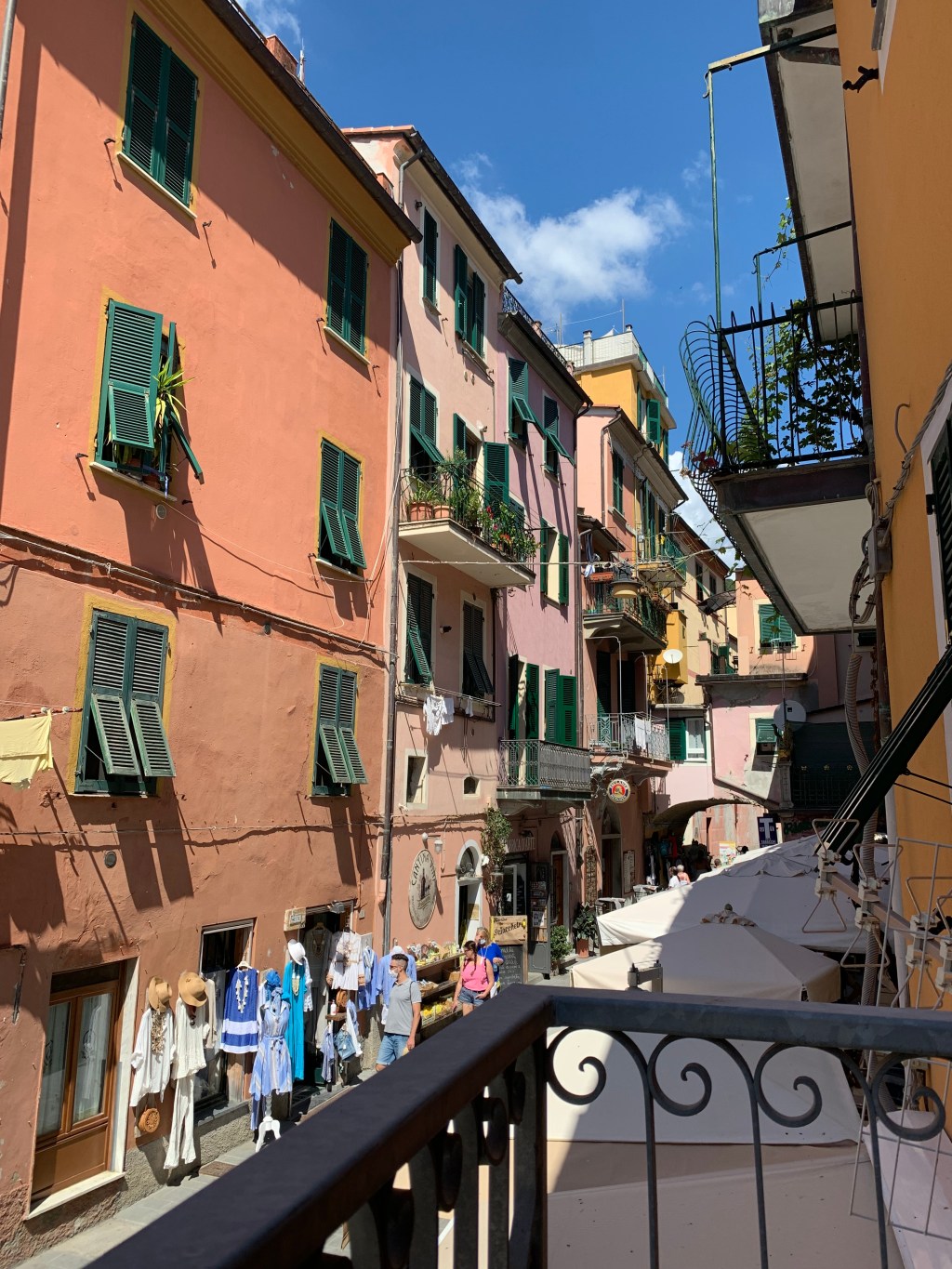
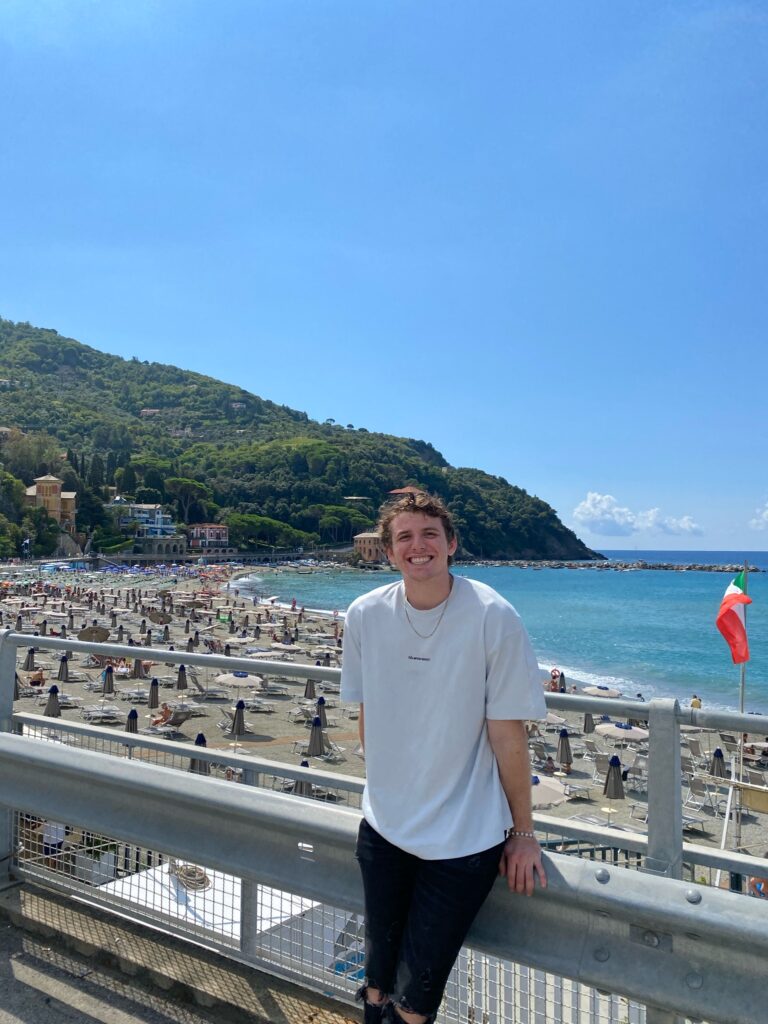

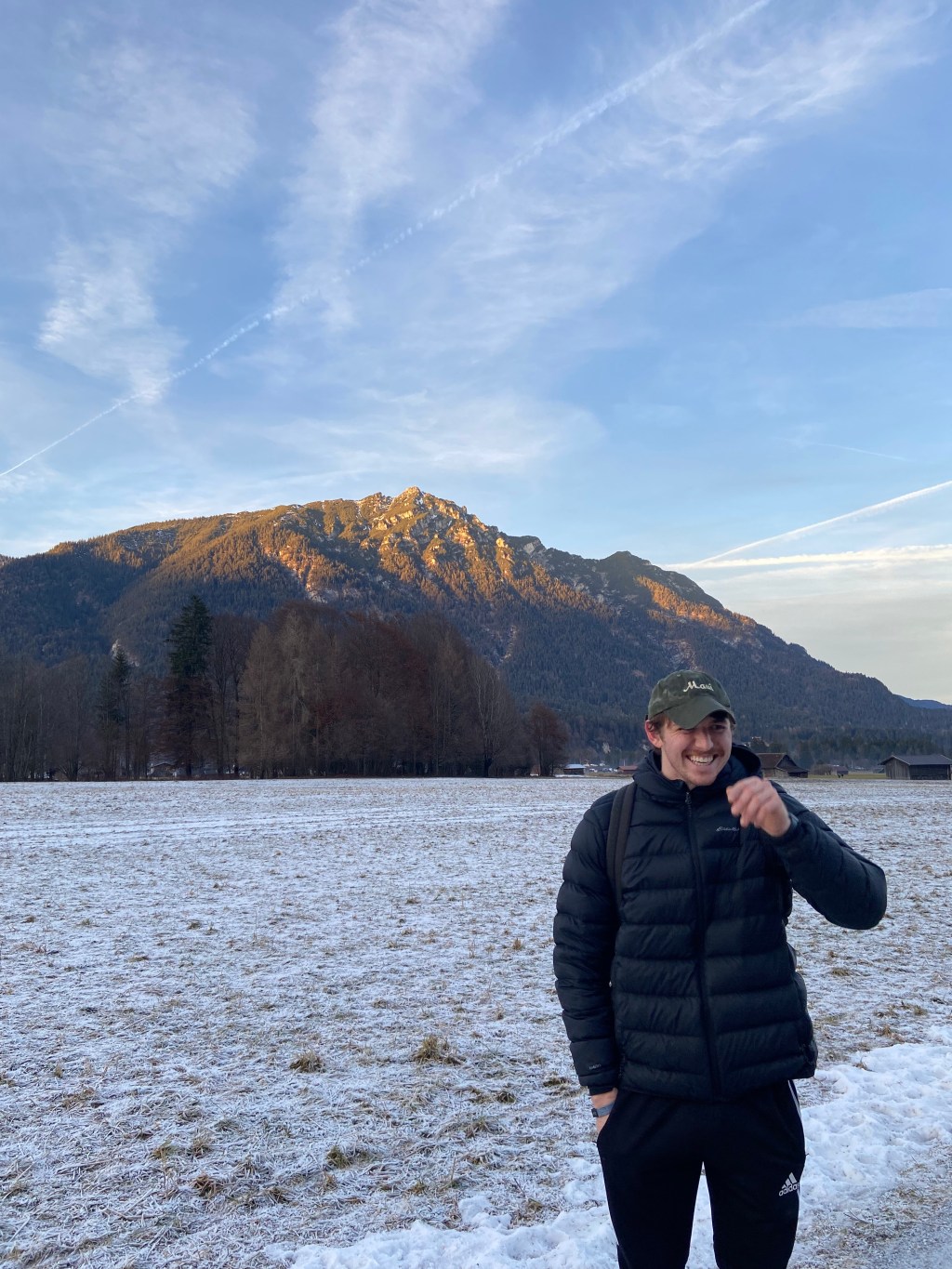


 Chipper Dreher